
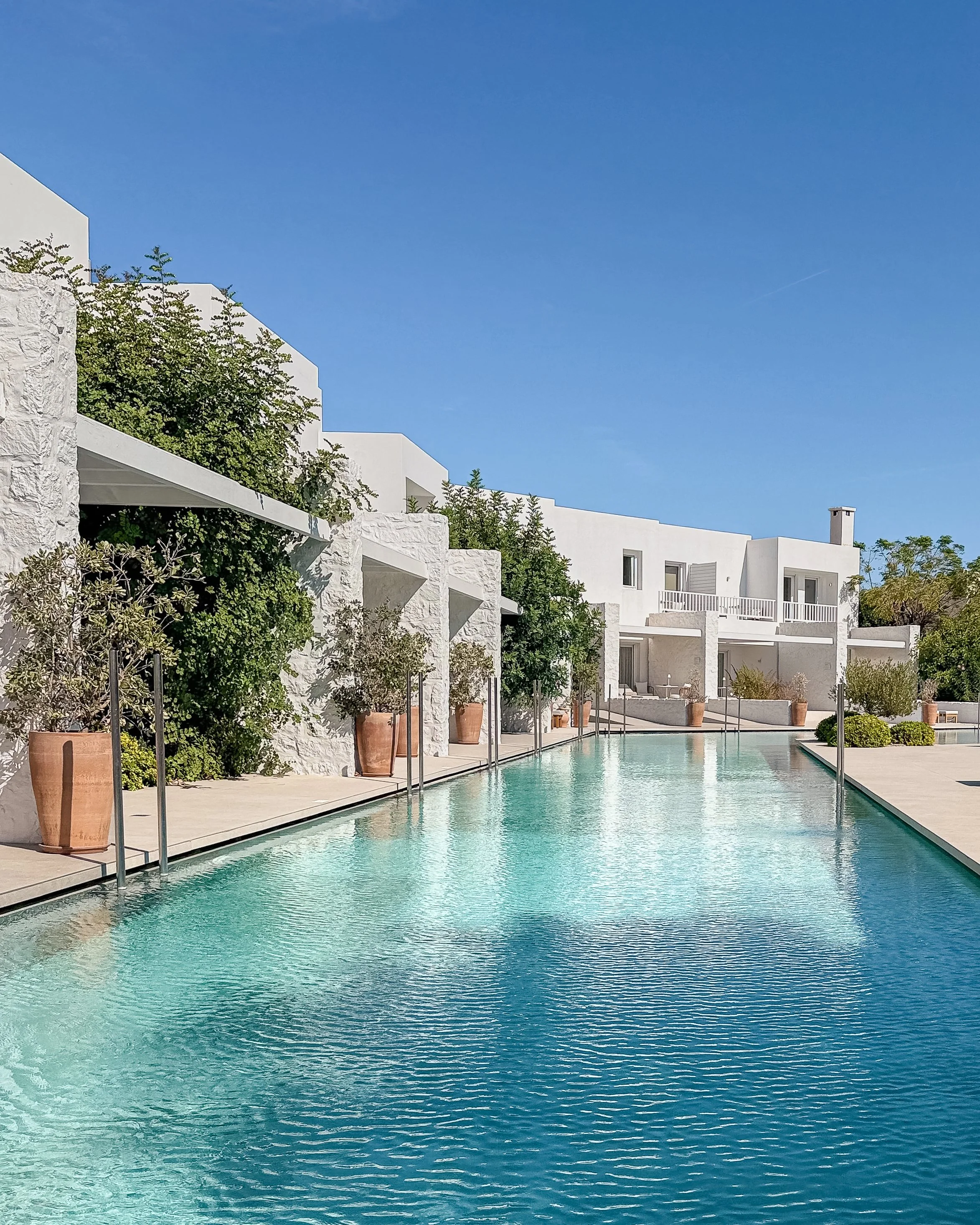
There are Greek islands you visit for their beaches, others for their villages, food or nightlife. And then there is Patmos, an island that seems to invite a different kind of journey. Here, the Aegean is every shade of blue, whitewashed houses climb the hillsides, and centuries of spiritual history remain part of everyday life. It is a place where the pace feels gentler, conversations seem to last longer and hospitality comes with a warmth that is difficult to put into words.
On the sheltered shores of Grikos Bay, Patmos Aktis offers a way to experience this distinctive island without separating yourself from what makes it special. The only five-star hotel on Patmos, it combines contemporary design, beachfront living and sophisticated dining with an atmosphere that feels closely connected to the landscape around it. As part of The Luxury Collection by Marriott International, the resort brings an international perspective to an island that has always followed its own rhythm.
What stayed with me most, however, was not simply the setting or the design. It was the kindness. I felt an extraordinary warmth at Patmos Aktis, a genuine sense of being welcomed and cared for that continued throughout my time on the island. Interestingly, I encountered the same feeling beyond the hotel, among the people of Patmos themselves. That shared spirit of generosity became as memorable as the Aegean views.
Patmos: An Island With a Spiritual Soul
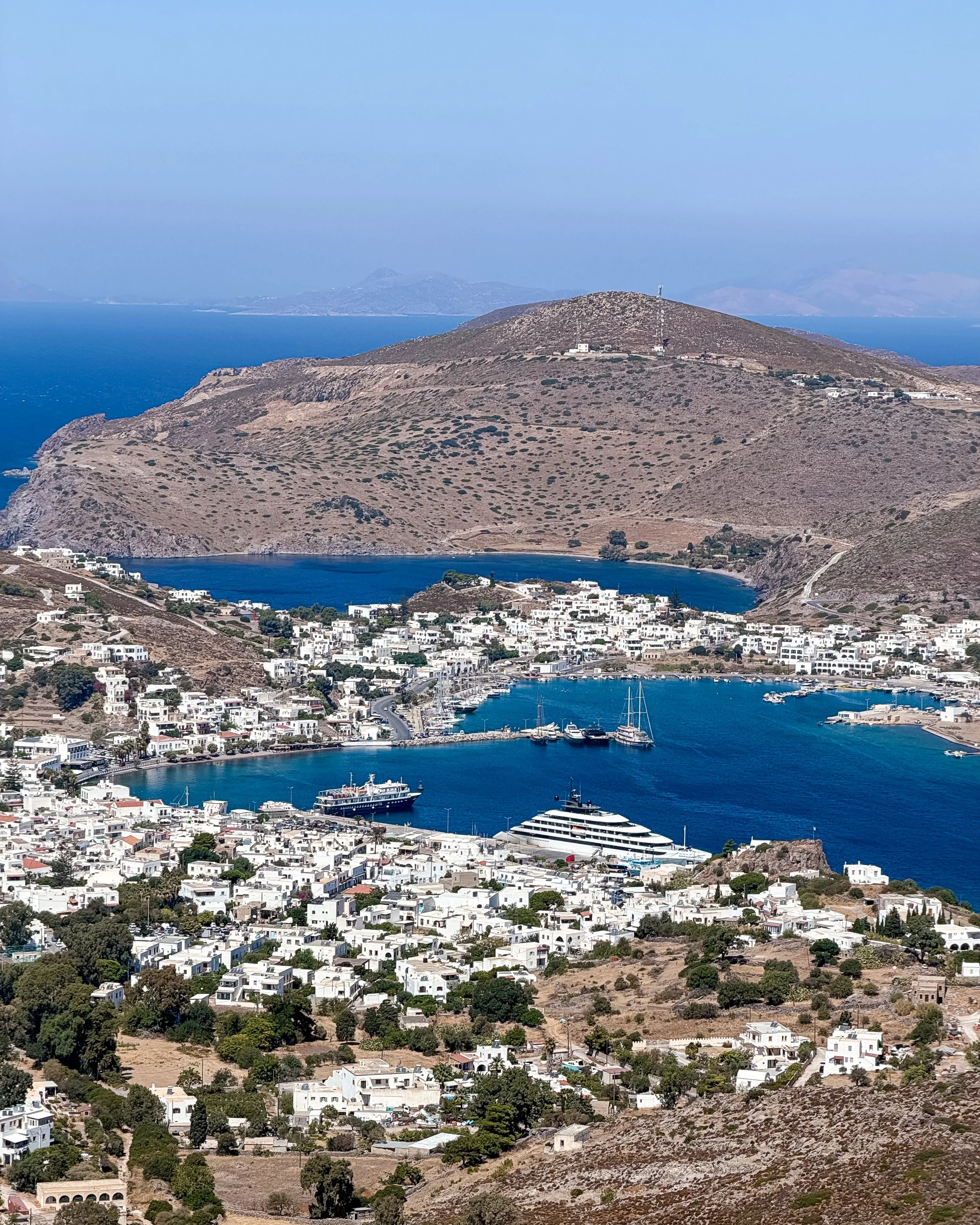
Patmos has a place in Greek history unlike almost anywhere else in the Aegean. Often called the Jerusalem of the Mediterranean, the island is closely associated with Saint John the Theologian, who, according to Christian tradition, received the visions that became the Book of Revelation here.
That legacy remains woven into the island's identity. The Monastery of Saint John rises above Chora, its fortified walls overlooking a maze of whitewashed lanes, small squares and traditional houses. Nearby, the Cave of the Apocalypse draws pilgrims and visitors to the place traditionally associated with John's revelations. Both sites are central to understanding Patmos, not only as a beautiful island but as a destination with profound spiritual significance.
Yet Patmos is not defined by religion alone. It has a quiet sophistication, with independent boutiques, inviting tavernas, sailing boats and a discreet international crowd that seems to appreciate the island precisely because it has resisted becoming another busy resort destination. Days can be spent exploring historic streets, swimming in secluded coves or lingering over a long lunch, with little pressure to do anything more.
This combination of spirituality, culture and relaxed island life gives Patmos its particular character. And it is the backdrop against which Patmos Aktis makes the most sense.
From Historic Xenia to Patmos Aktis
The story of Patmos Aktis began in 1960, when it opened as Xenia Patmos, part of Greece's historic Xenia hotel programme. The initiative helped establish hotels in destinations across the country, often bringing modern architecture and hospitality to places that were still relatively remote. The original property became part of the island's story long before Patmos attracted today's international travellers.
Following an extensive transformation, the hotel joined The Luxury Collection by Marriott International, introducing a new chapter while retaining a connection to its setting. The redesign brought together the work of Stylianidis Vaggelis Architects and Anastassiadis Architecture & Design, with interiors led by Brazilian architect and designer Patricia Anastassiadis.
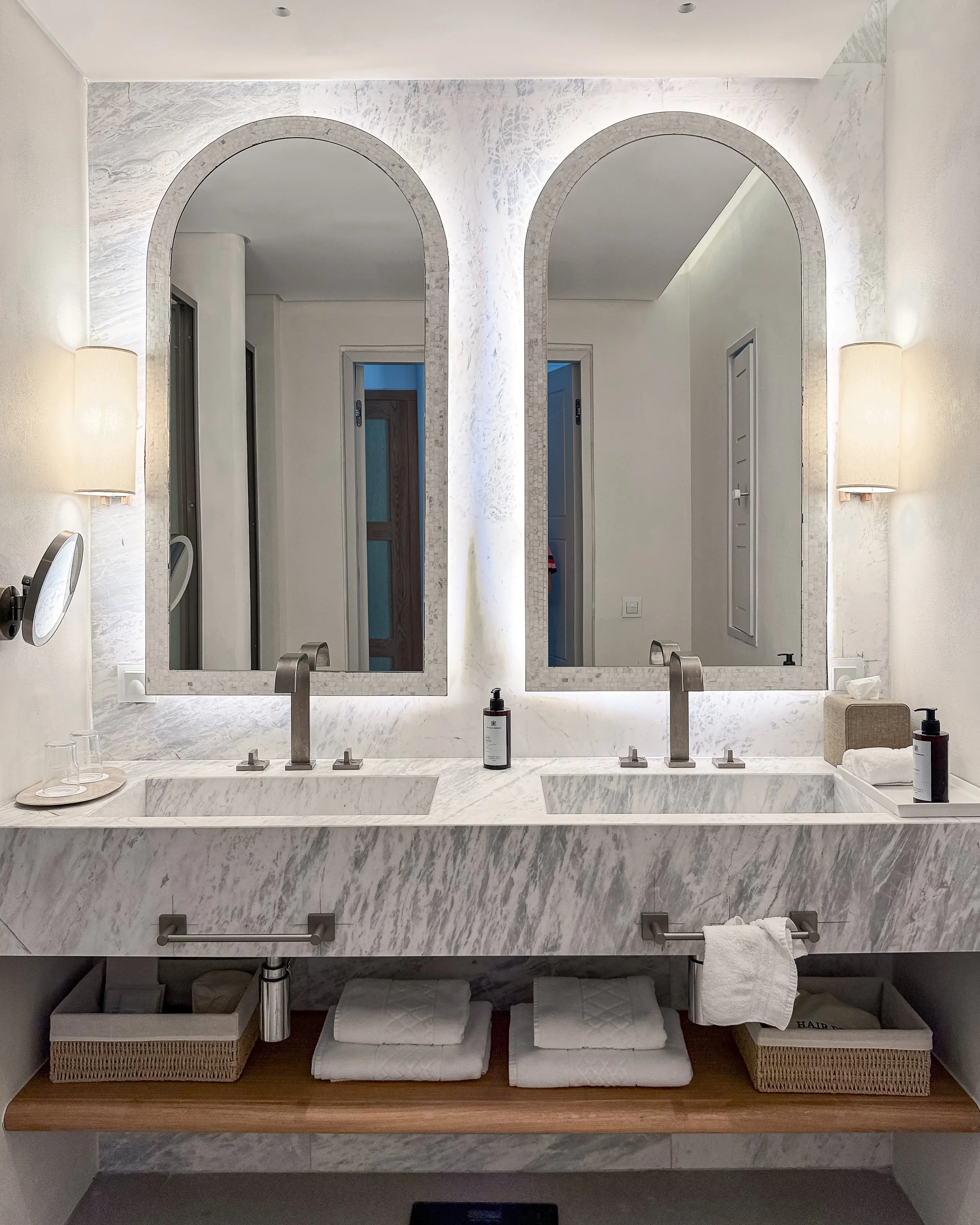
The result is a resort that feels contemporary without losing sight of its surroundings. Rather than imposing an entirely separate design language, the interiors draw from the architectural character of the Greek islands: natural textures, quiet colours, tactile materials and a restrained Mediterranean palette. Local references appear through furnishings, artwork and details that give the spaces a sense of place.
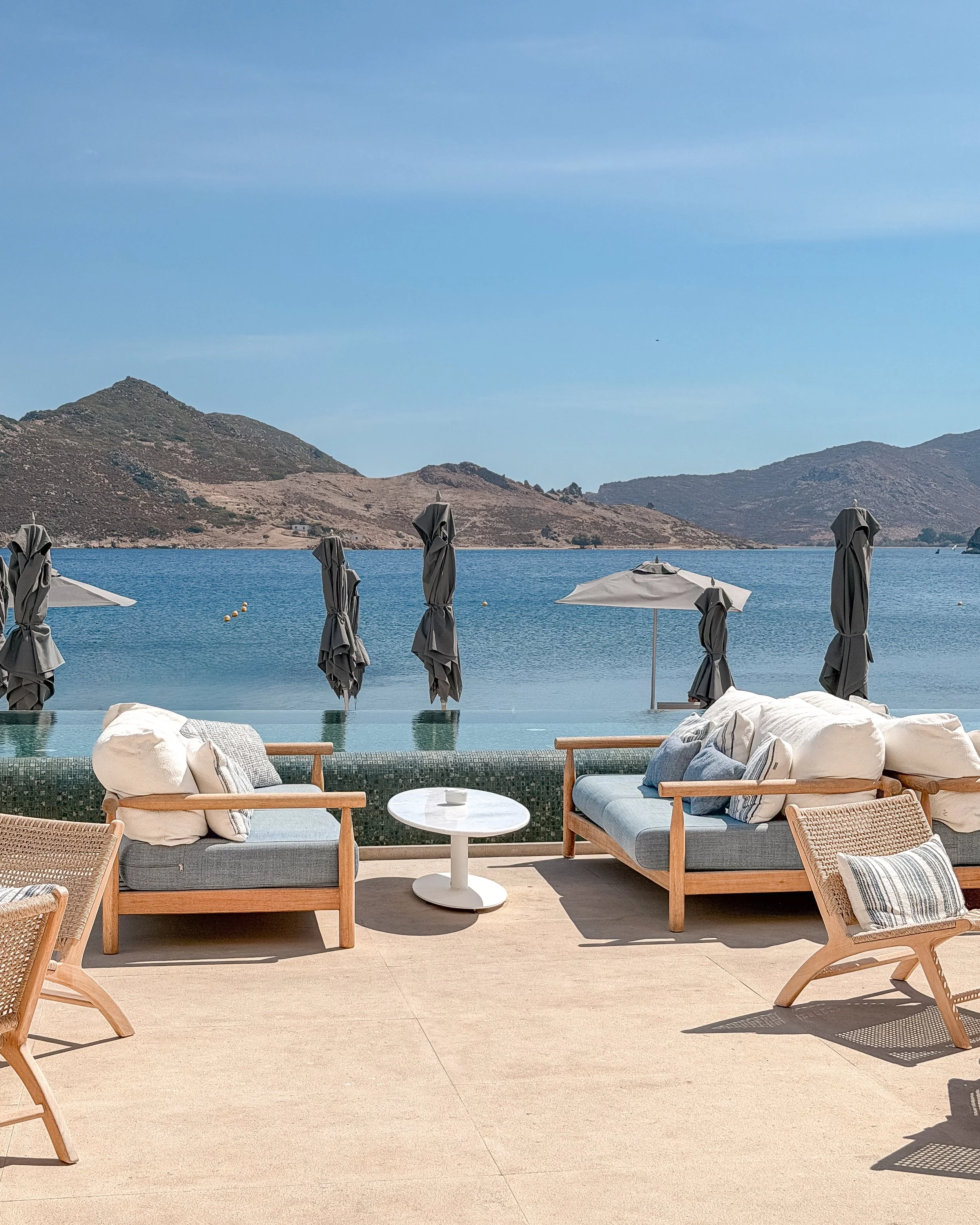
There is a deliberate lightness to the atmosphere. The design allows the landscape to remain the main event, with the sea and changing Aegean light never far from view. It feels polished, but not overly formal. The mood is one of understated sophistication, where barefoot living and thoughtful design comfortably coexist.
Rooms and Suites: Life at the Water's Edge
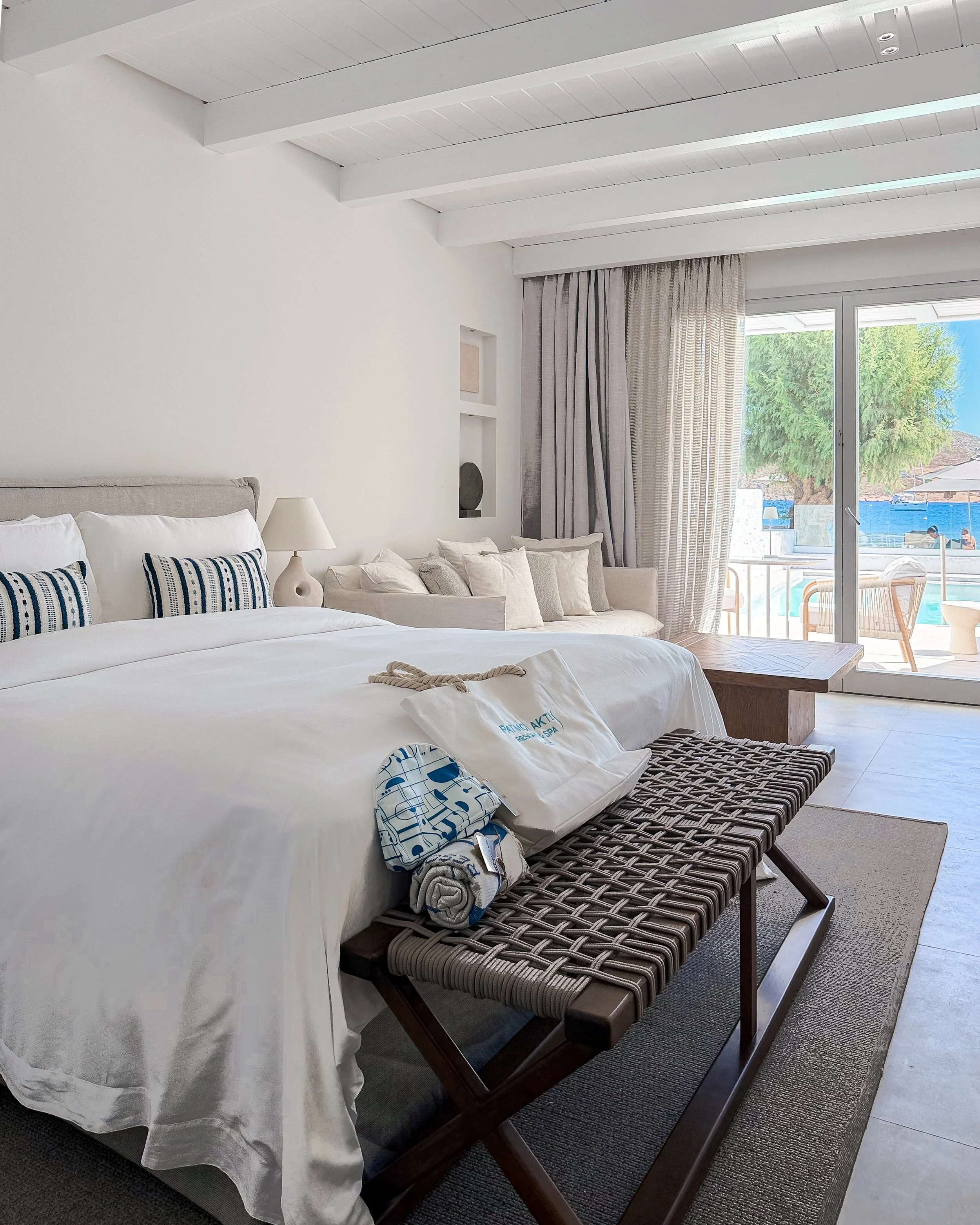
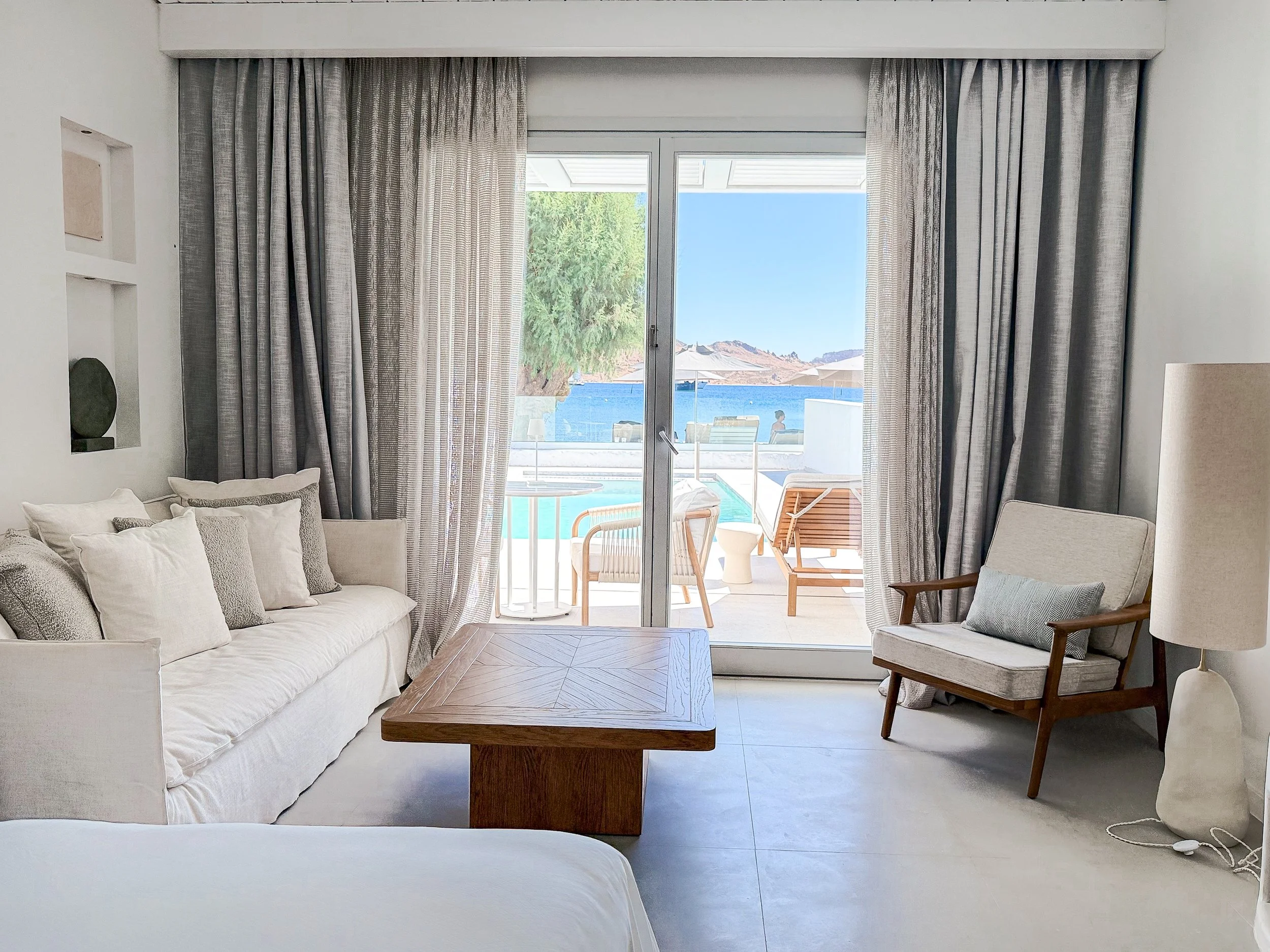
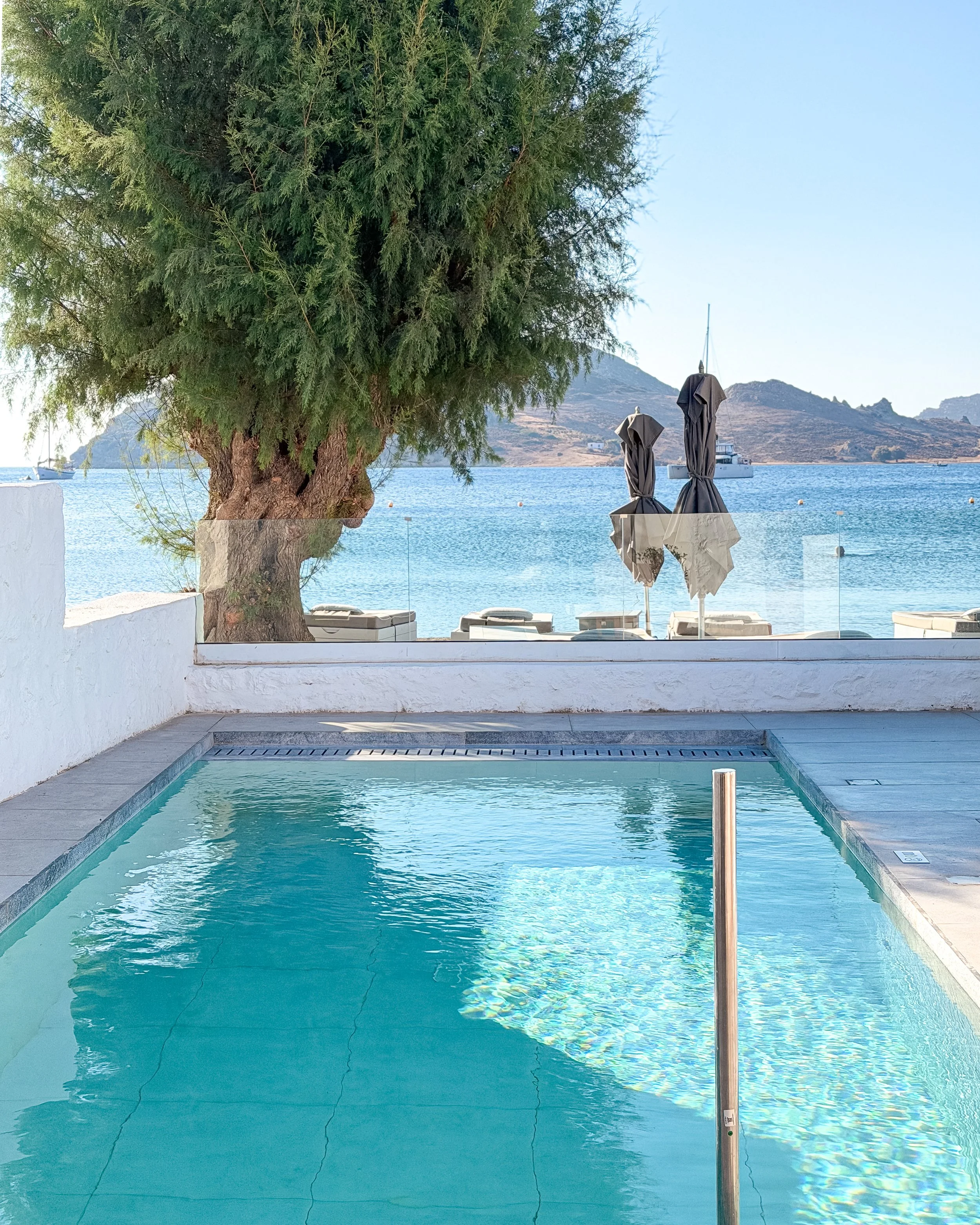
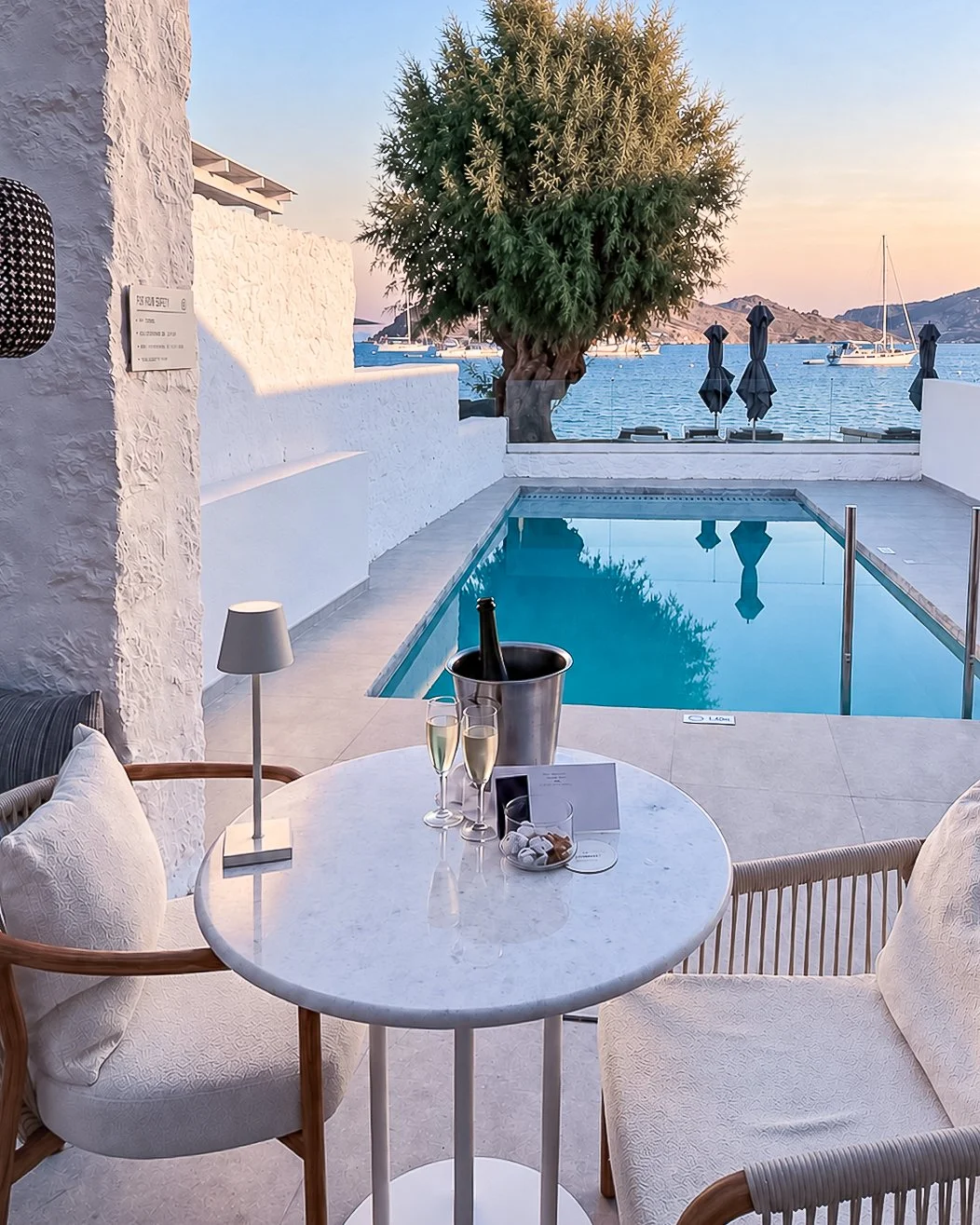
Patmos Aktis offers 89 rooms, suites and maisonettes across 14 accommodation categories, with options for couples, families and guests looking for a more private retreat. The range is particularly interesting because the connection to the sea is not reserved for a distant view from a balcony. In several categories, the shoreline becomes part of the accommodation itself.
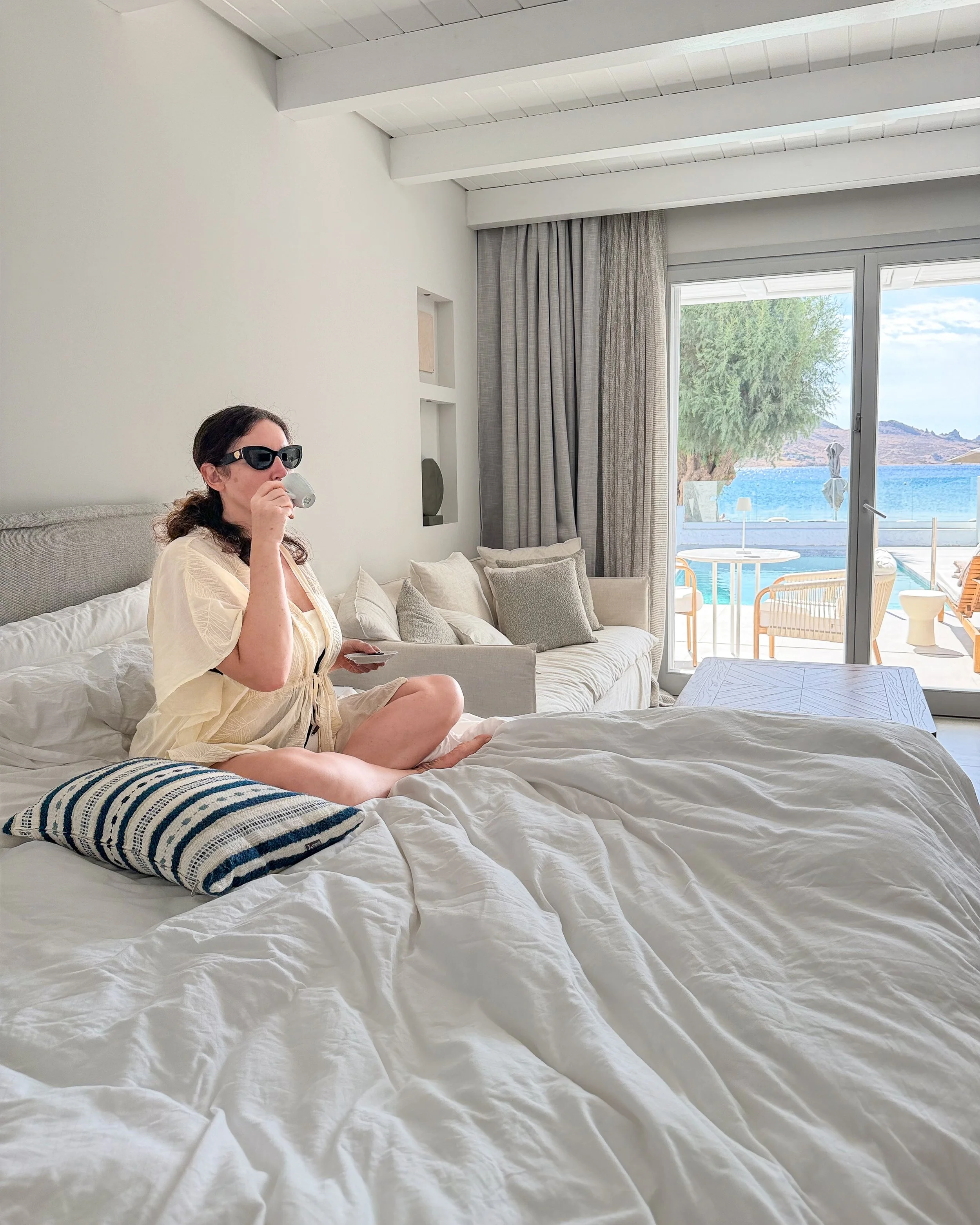
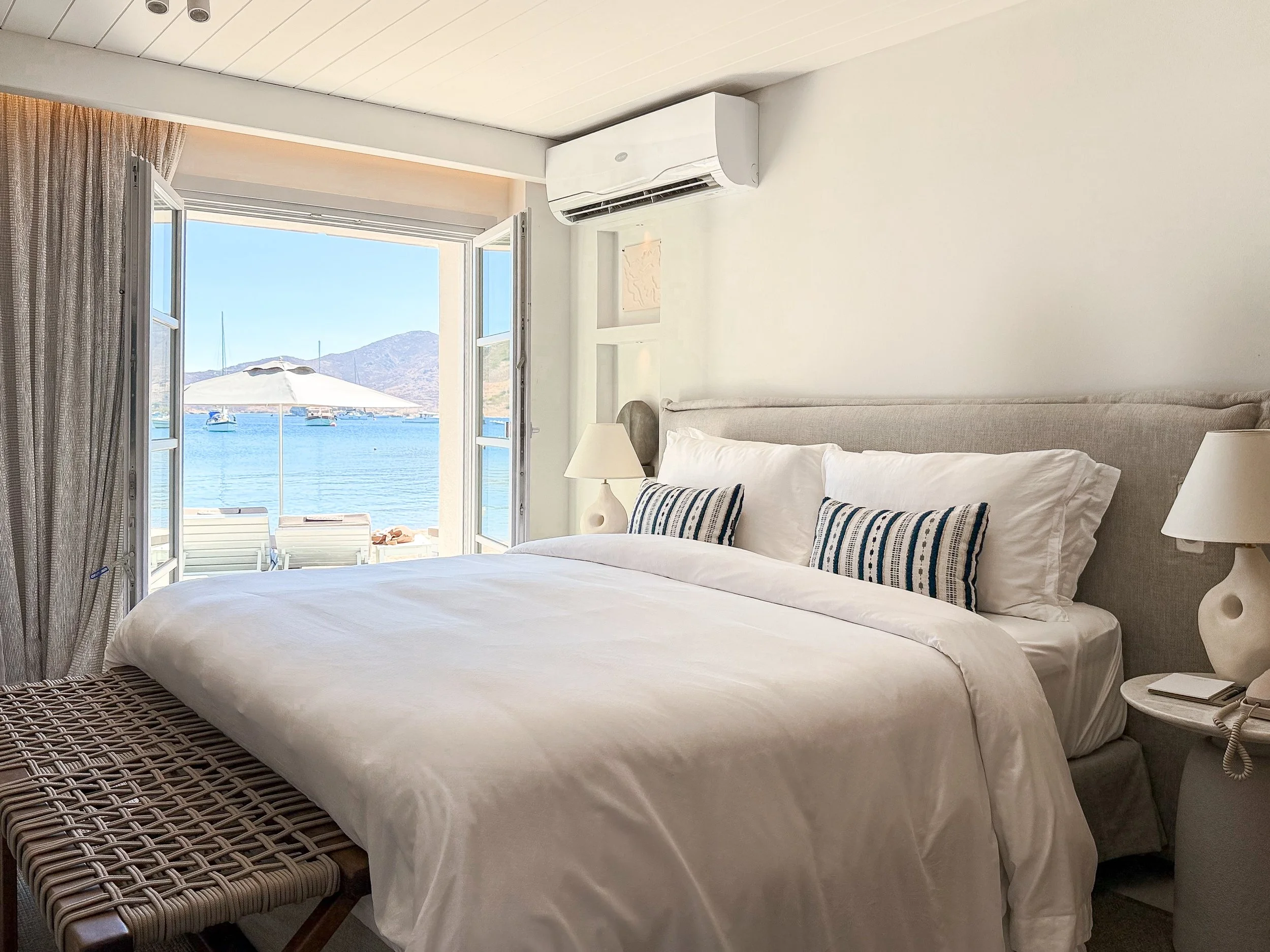
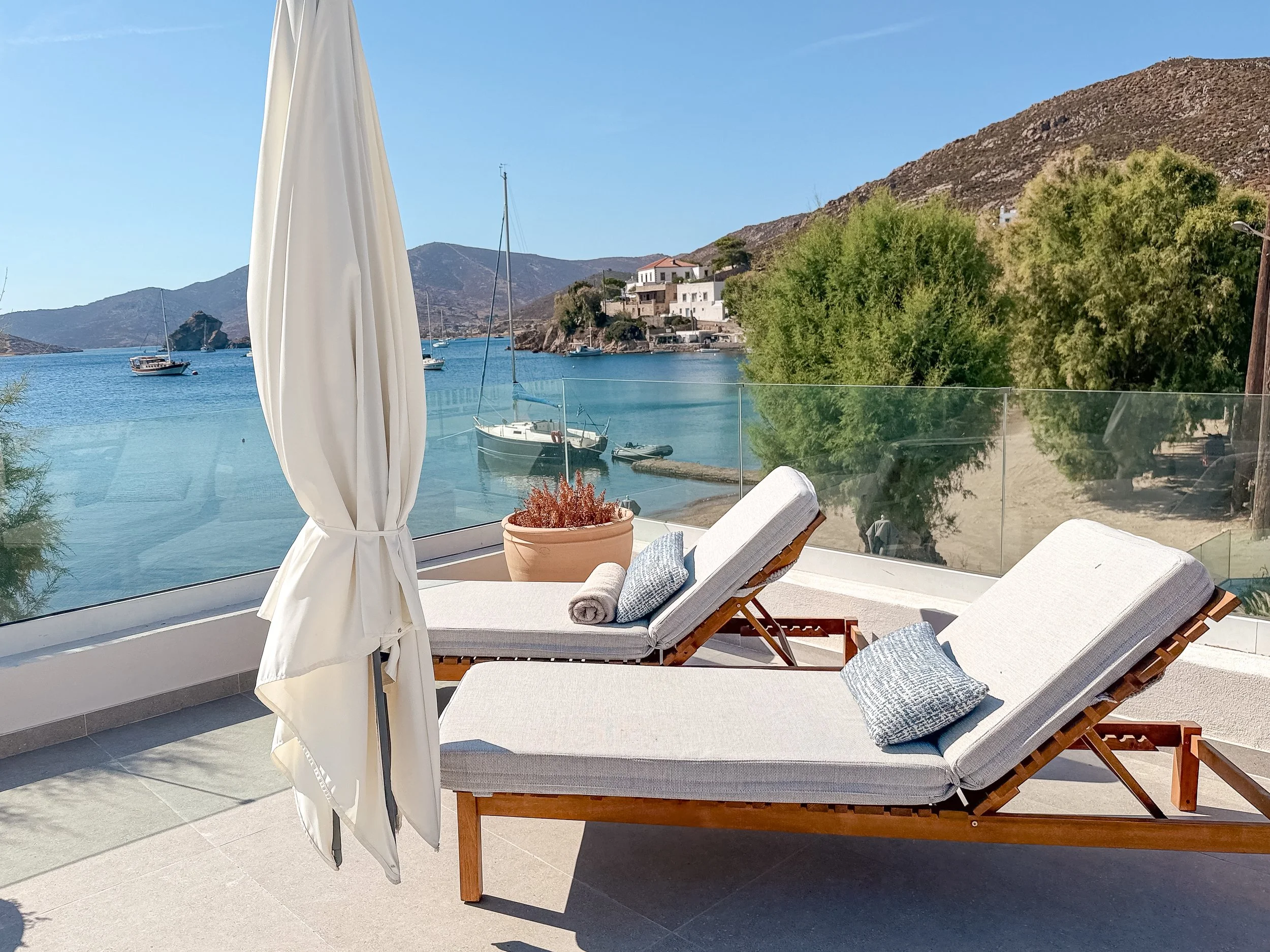
The room design follows the wider architectural concept, combining contemporary furnishings with natural materials and a palette inspired by the island. The emphasis is on comfort, privacy and an easy relationship between indoor and outdoor living. Balconies, terraces and views of the bay help bring the landscape into the experience.
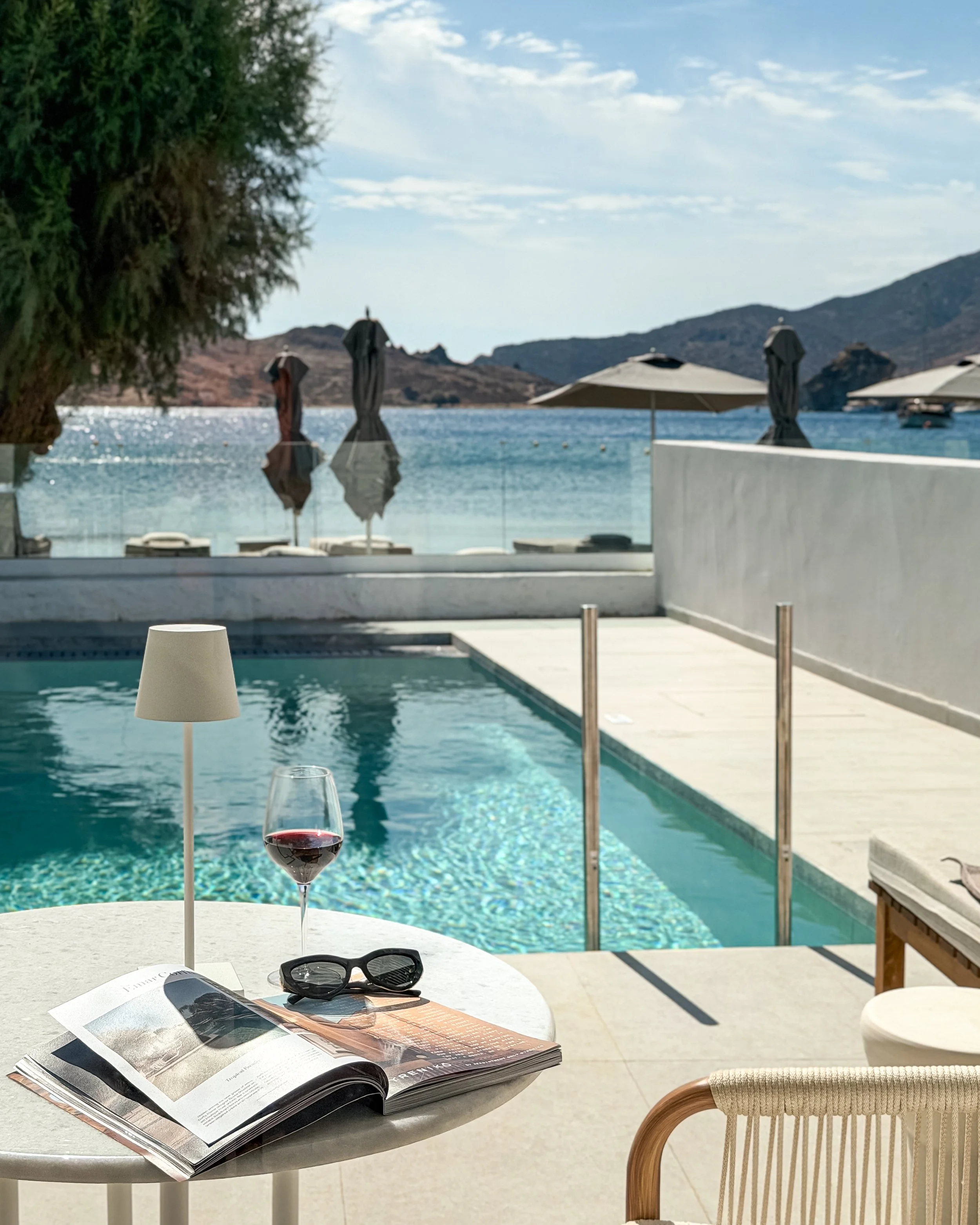
For those who want to be as close to the water as possible, the beachfront suites are among the most distinctive options. Some have private pools just steps from the Aegean, offering the rare pleasure of moving from your own terrace to the beach in moments. The Fisherman's Houses provide another take on seaside living, with direct beachfront access and a more house-like sense of space.
Other categories include one- and two-bedroom suites and maisonettes, with selected maisonettes offering private pools. This makes the resort suitable for longer stays and family holidays as well as romantic escapes.
What appeals to me most about this style of accommodation is the way it encourages you to experience Patmos without constantly having to plan the next activity. You can wake to the sound of the sea, spend a slow morning on the terrace and let the day unfold naturally. At a destination like this, that simplicity is part of the pleasure.
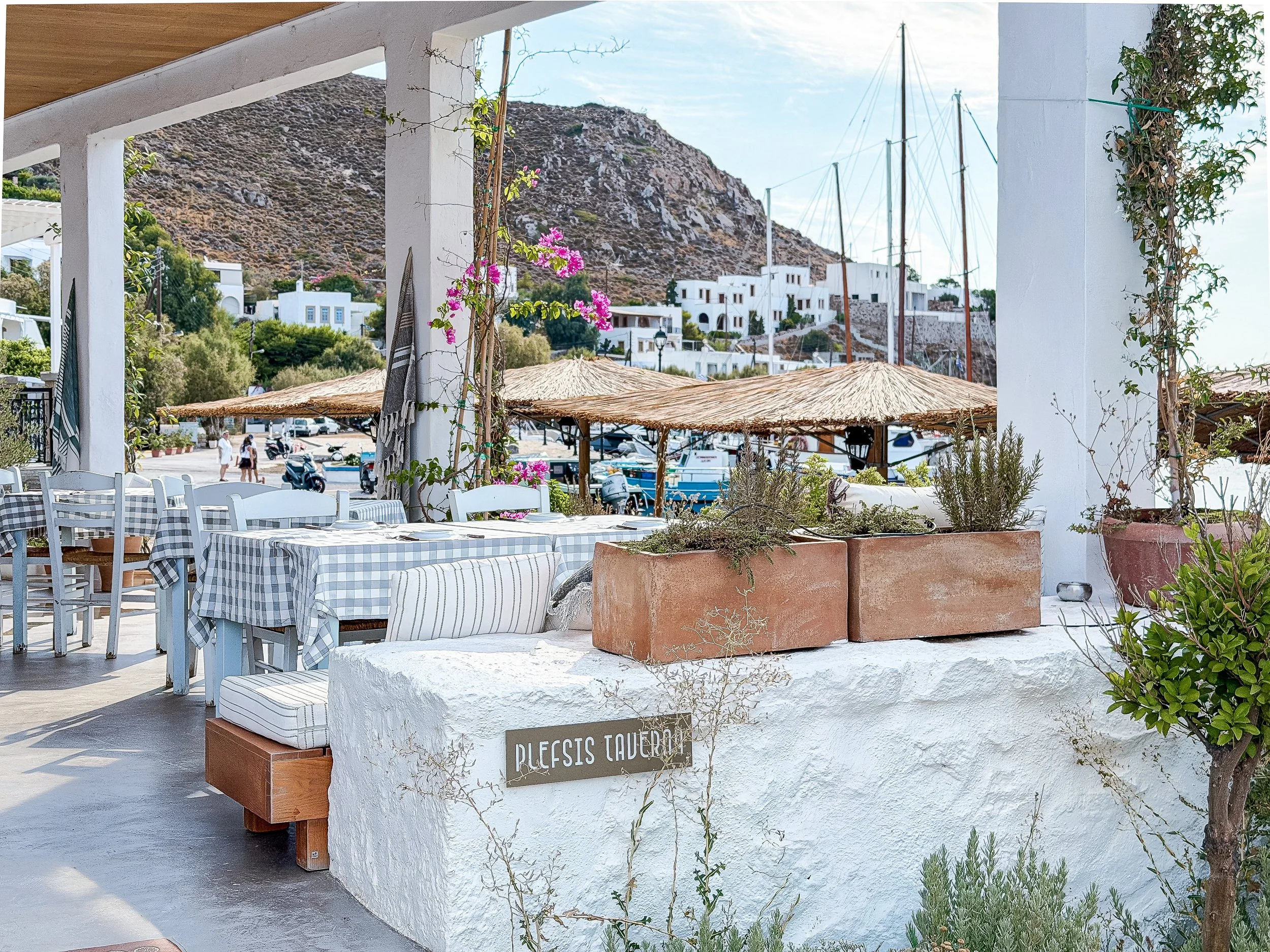
Plefsis: Greek Dining With Your Feet Almost in the Sea
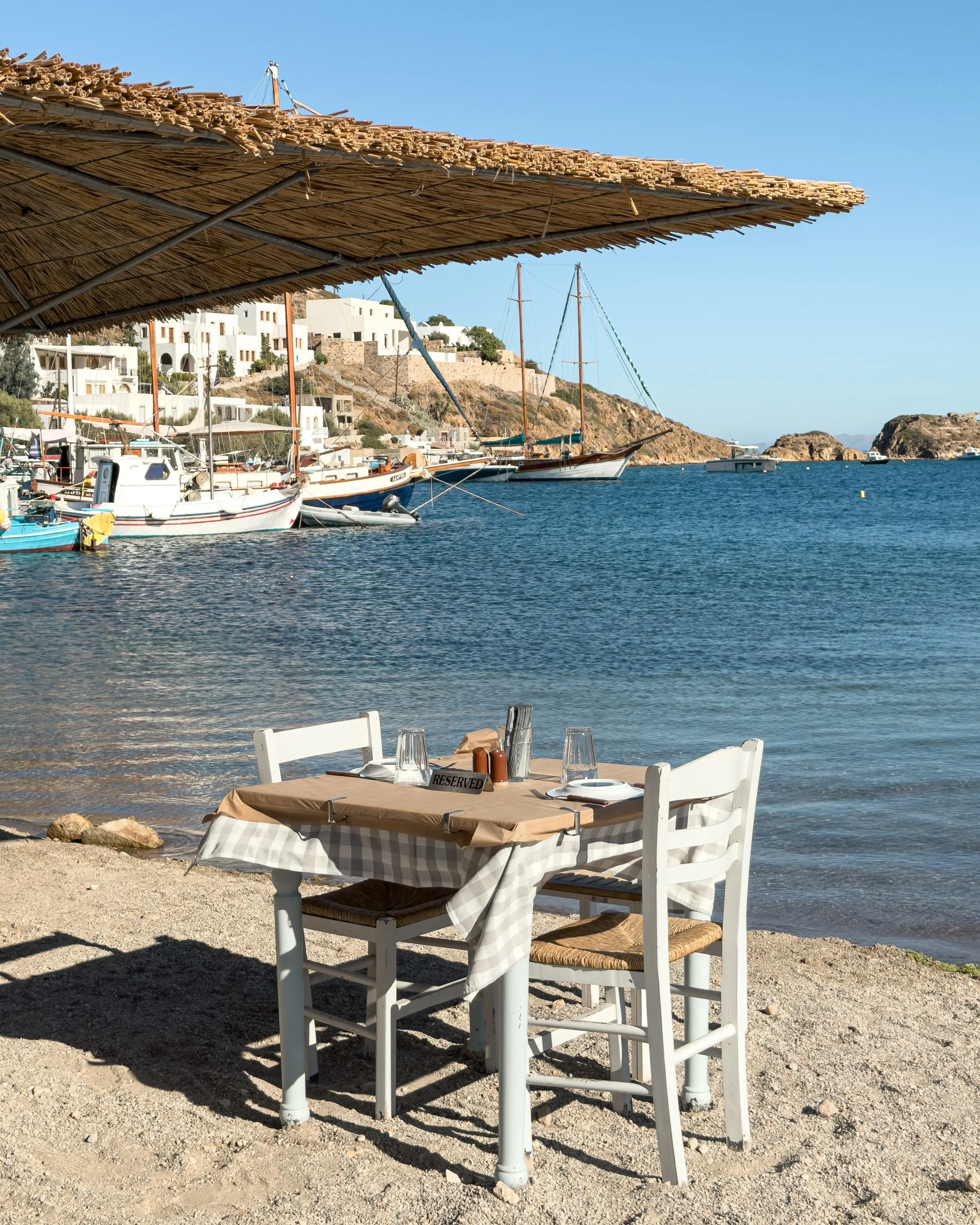
At Patmos Aktis, the relationship with the Aegean extends beyond the rooms and beach. At Plefsis, the hotel's Greek tavern, dining takes place so close to the water that, from some tables, you can sit with your feet almost touching the sea.
It is an evocative setting, especially as the light softens towards evening and the bay begins to change colour. But Plefsis is not simply about the view. Its culinary identity is rooted in Greek and Dodecanese traditions, with fresh fish, seafood and seasonal ingredients at the centre of the experience.
The Dodecanese has its own culinary personality, shaped by the islands' history and geography. At Plefsis, that heritage provides the starting point for a meal that feels connected to Patmos rather than designed for an international audience alone. The mood is relaxed and convivial, with the sea just beyond the table and no need for anything elaborate to make the occasion memorable.
This is the kind of restaurant that captures the pleasure of Greek island life: good ingredients, an unhurried meal and the feeling that the evening can last as long as you like. Plefsis serves lunch and dinner, and its waterfront setting makes it one of the most distinctive places to eat at the resort.
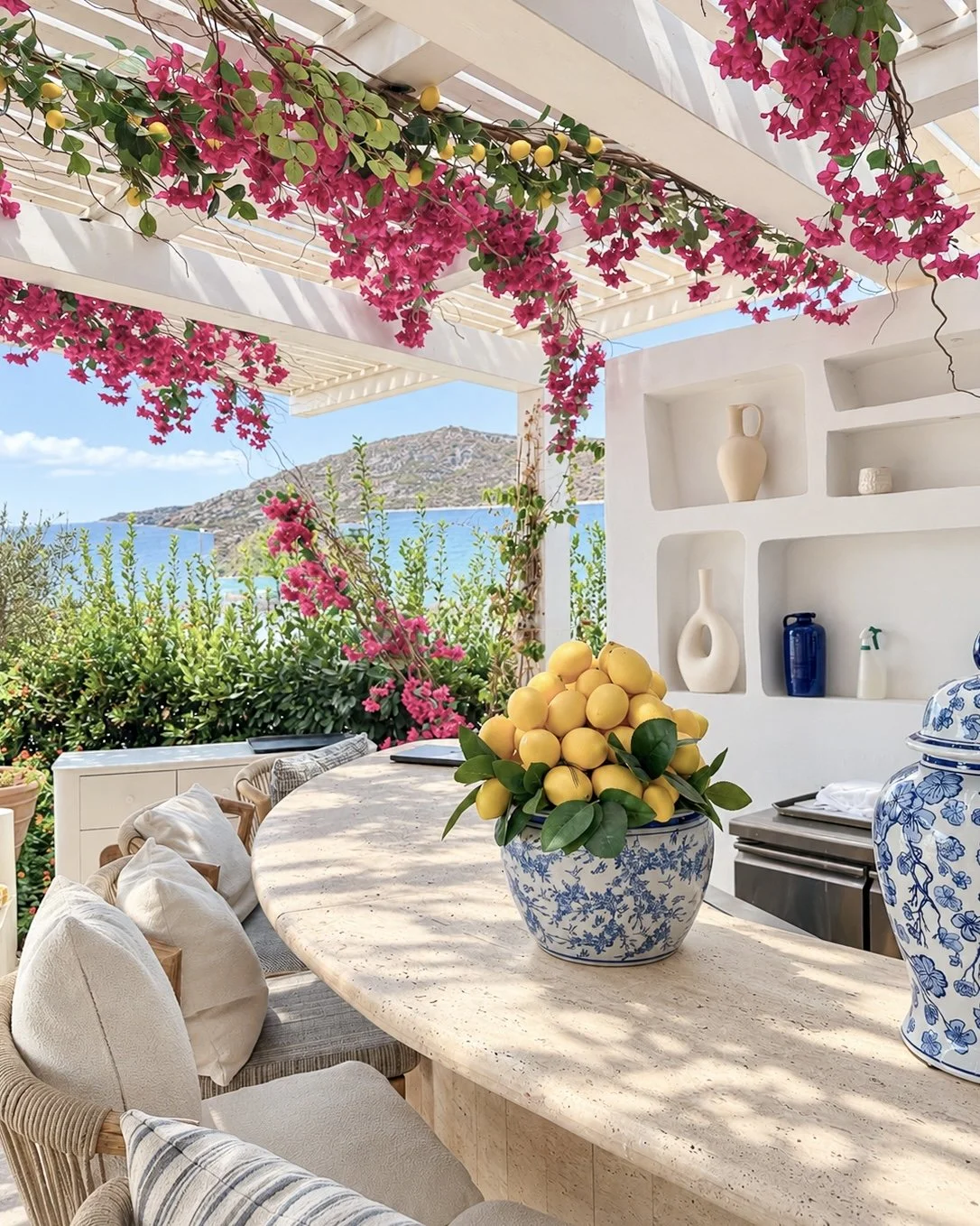
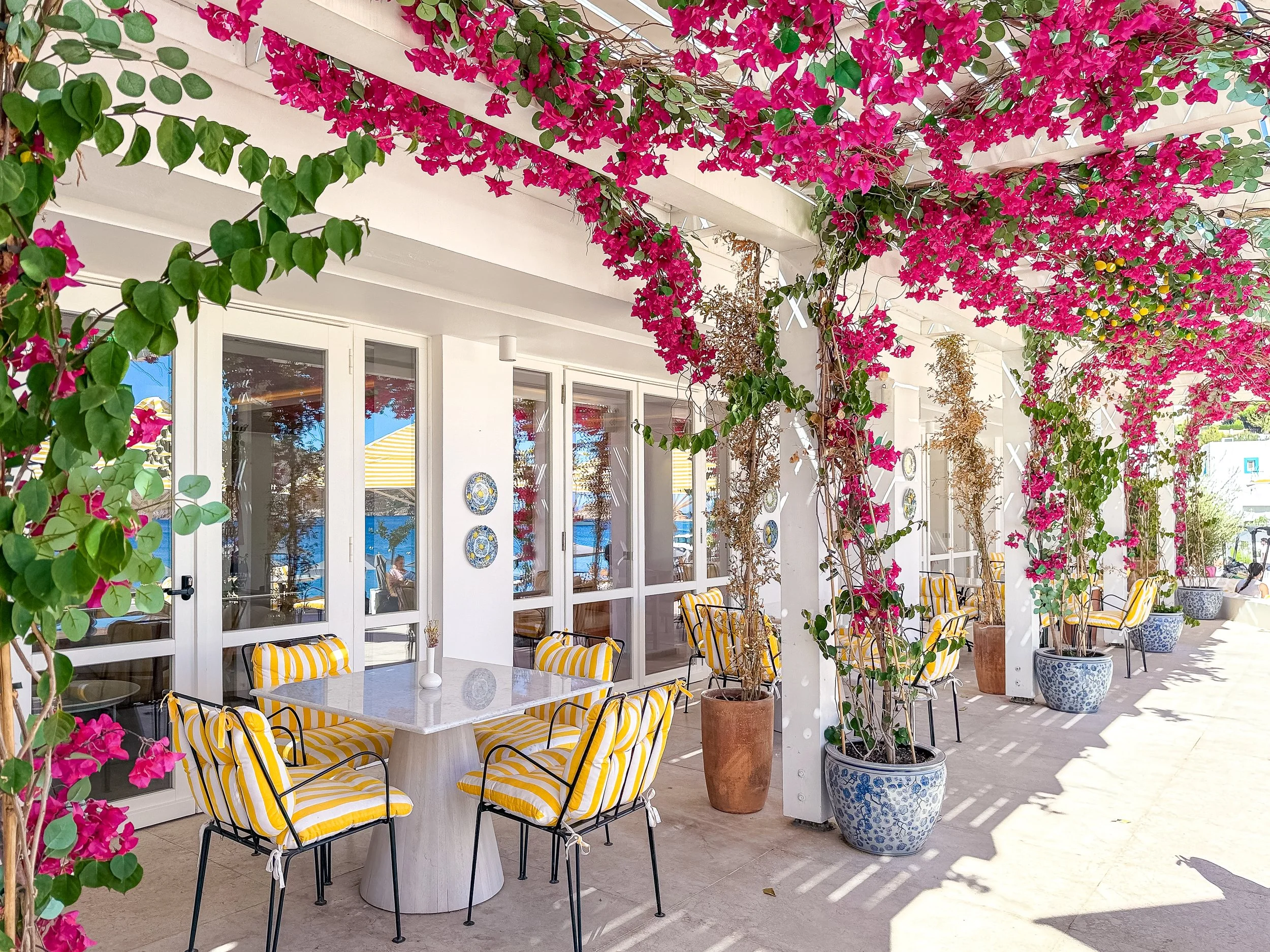
Barolo Patmos: Italian Flavours Beneath the Bougainvillea
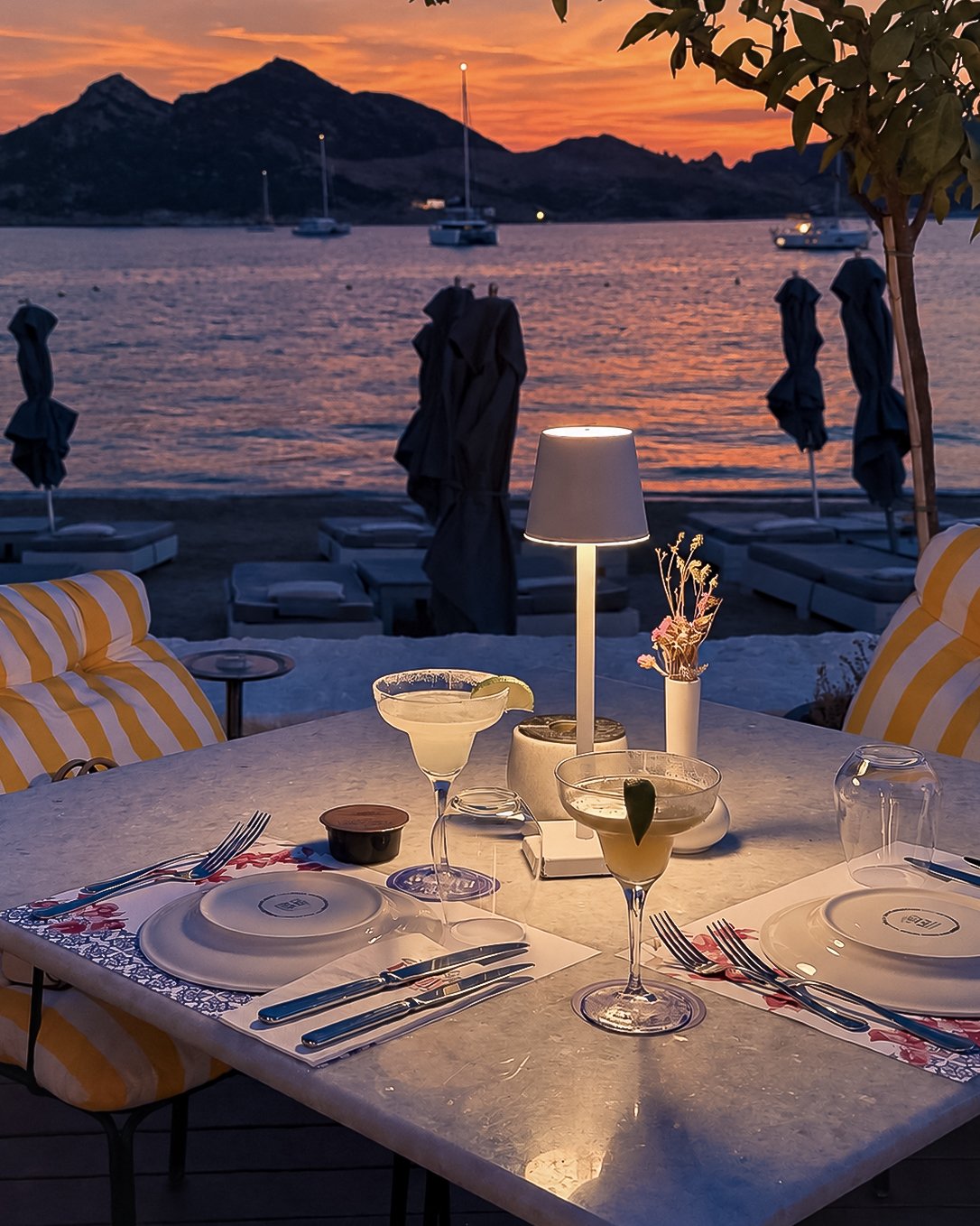
For a different mood, Barolo Patmos brings Italian cuisine to the shores of Grikos Bay. Where Plefsis is rooted in Greek tavern culture, Barolo offers a more polished evening experience, with Italian culinary traditions, carefully selected ingredients and a setting that comes into its own around sunset.
Tables sit beside the water and beneath bougainvillea, creating a beautiful backdrop for a long dinner. As the sun lowers towards the horizon, the colours of the bay shift and the atmosphere becomes more intimate. It is an ideal setting for a special evening, whether that means sharing several dishes over a bottle of wine or beginning with cocktails while the last light settles over the sea.
The menu draws on Italian flavours, including seafood pasta, grilled dishes, artisanal pizzeti and carefully selected cold cuts. The restaurant also places emphasis on wine, making it a natural choice for guests who enjoy pairing a meal with something interesting in the glass.
I like that these two restaurants offer different expressions of the same setting. At Plefsis, the focus is on the familiar pleasure of Greek food beside the water. At Barolo, the evening feels a little more dressed up, without losing its connection to the island. You can choose the mood that suits you, rather than having one dining experience define the entire stay.
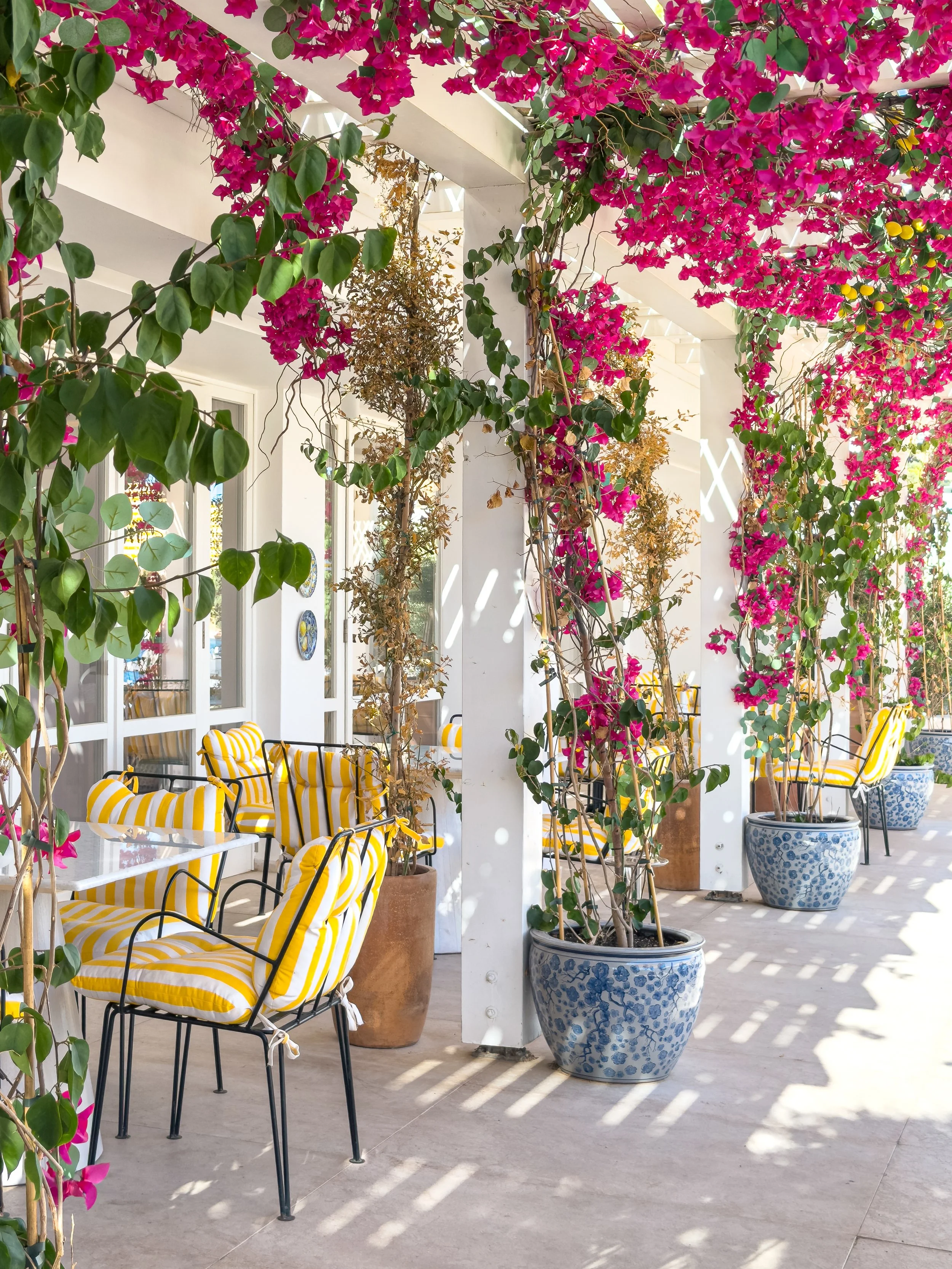
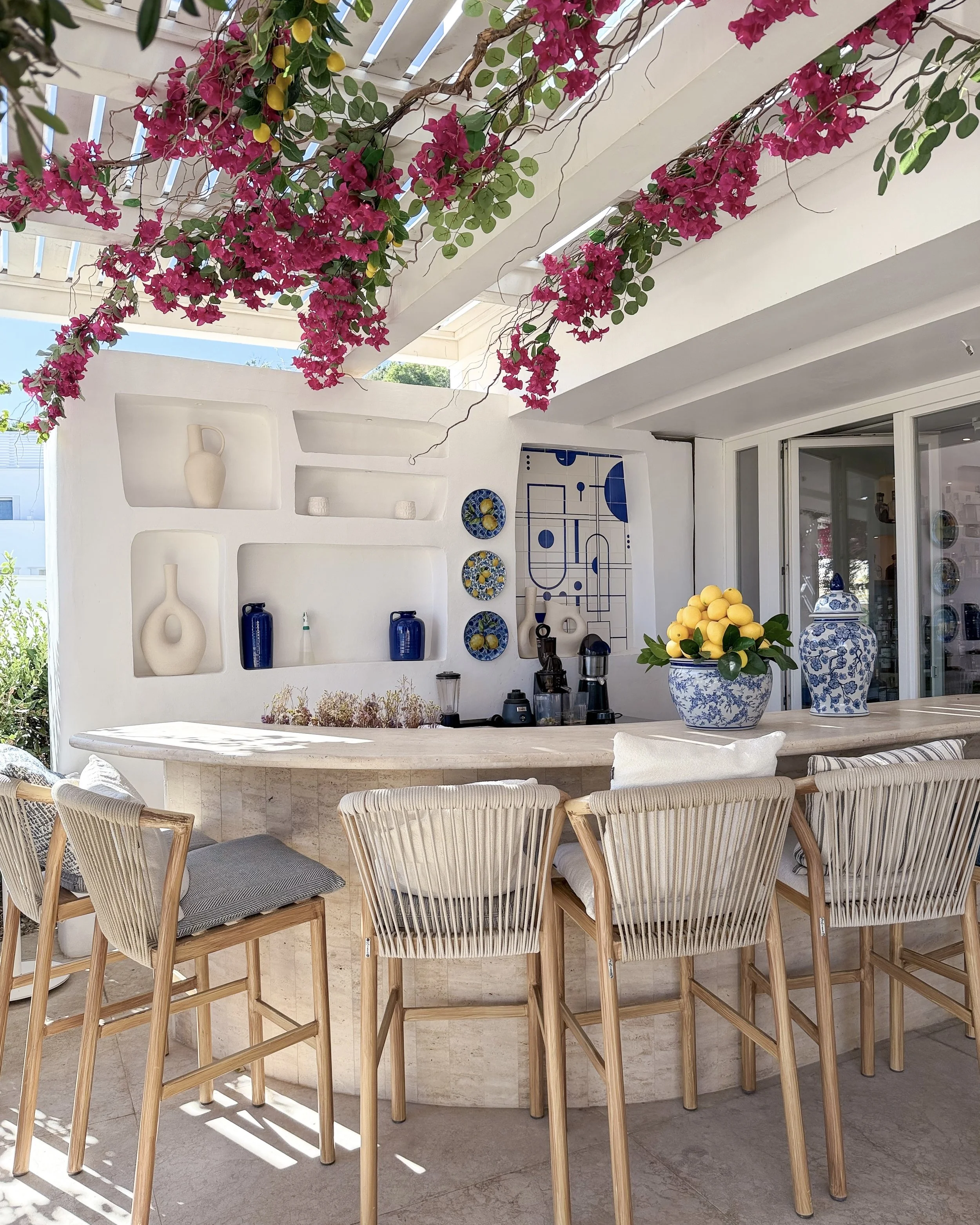
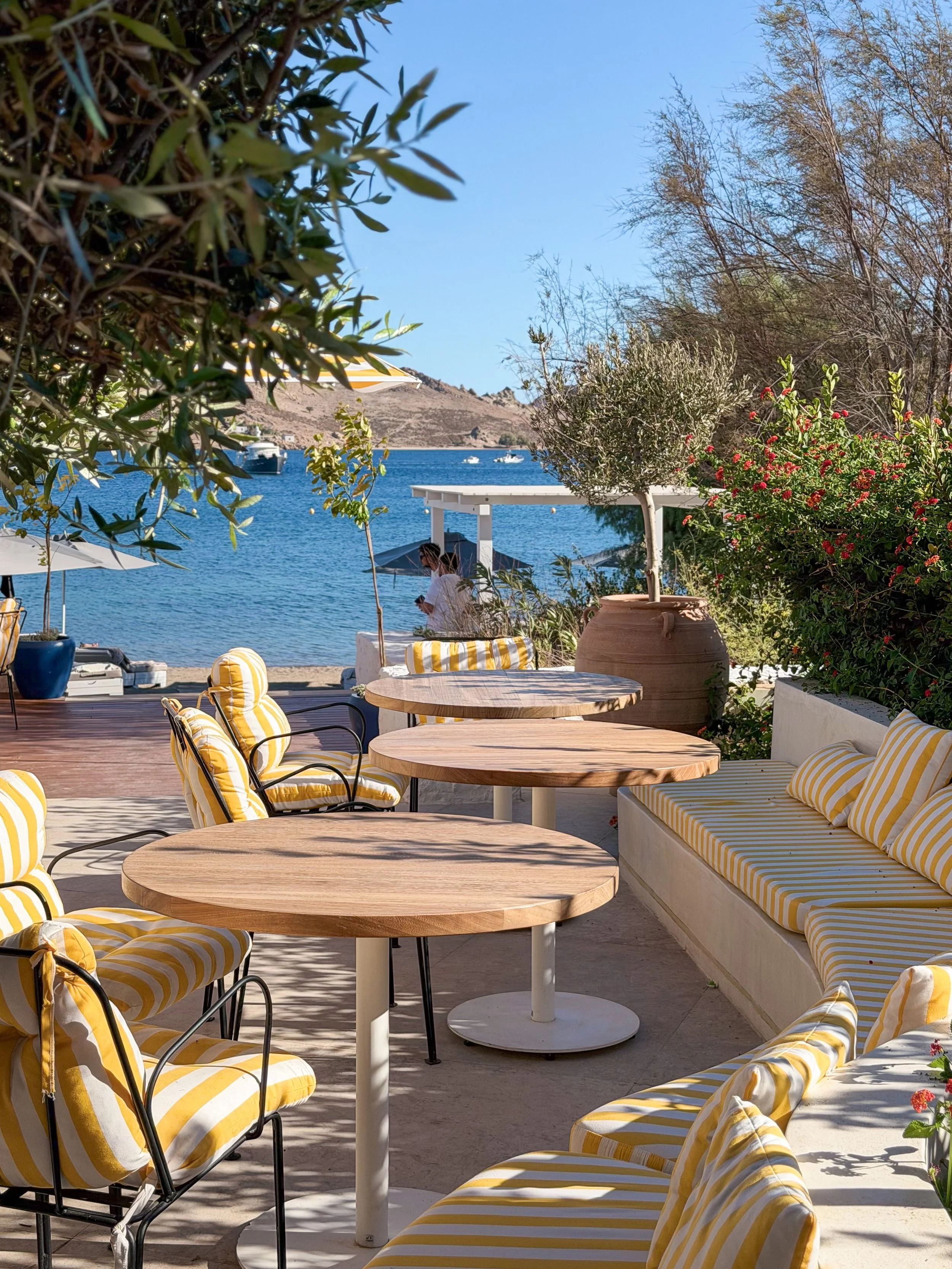
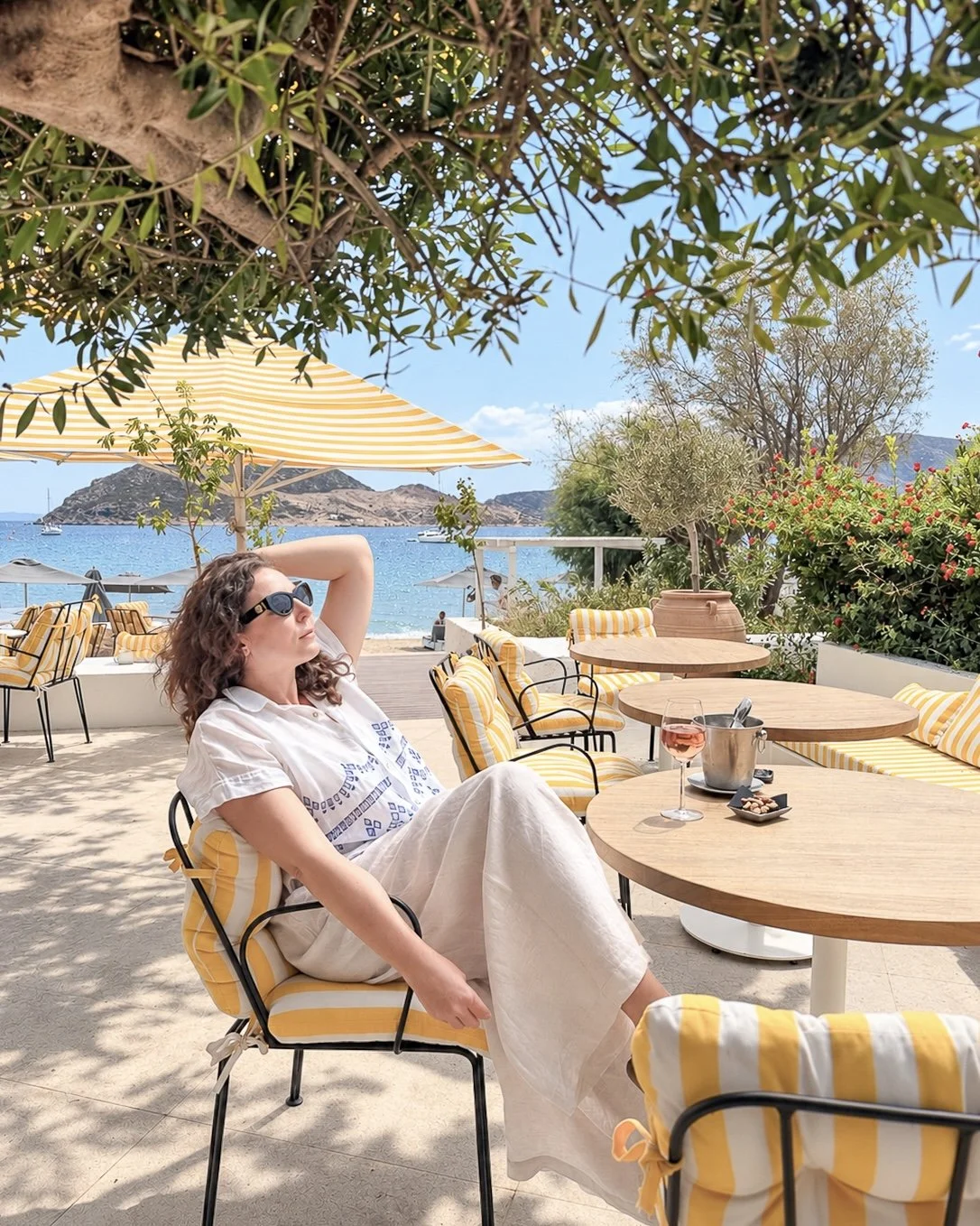
CIELO Daylight: Slow Mornings and Fresh Flavours
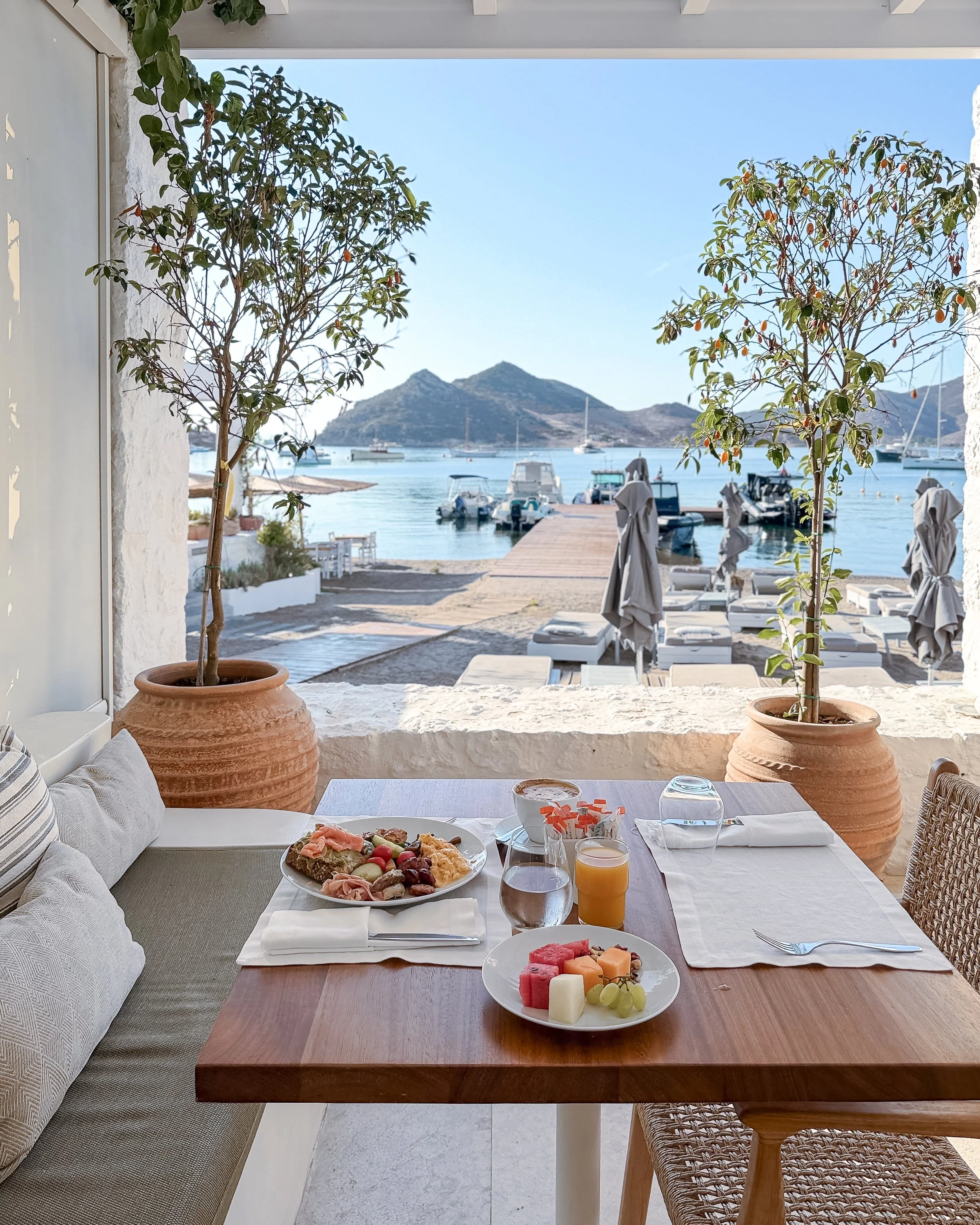
CIELO Daylight is the resort's daytime dining concept and the setting for breakfast. Its atmosphere is lighter and more casual, with views across Grikos Bay and spaces designed for a leisurely start to the day.
Breakfast is an important ritual on a Greek island. There is no need to rush when the sea is right outside and the day ahead might involve little more than a swim, a boat trip or a walk through Chora. CIELO provides a place to ease into the morning before deciding what comes next.
The restaurant also serves brunch, lunch and lighter dishes, making it a convenient stop between time at the beach and excursions around the island. The design carries through the resort's natural palette and relaxed Mediterranean sensibility, with the option to dine indoors or outside by the water.
Another thoughtful element is the hotel's own garden, where fruit and vegetables are grown for use at the property. It is a small but meaningful connection between the resort and its immediate environment, reinforcing the idea that the experience should feel rooted in Patmos rather than detached from it.
ANASA Wellness & Spa: The Art of Taking a Breath
The name ANASA comes from the Greek word for breath, and it provides a fitting starting point for the hotel's approach to wellness. On Patmos, where spiritual heritage and a slower pace of life are so closely linked, wellbeing feels less like a scheduled activity and more like an opportunity to reconnect with yourself.
Redesigned as part of the hotel's transformation, ANASA Wellness & Spa takes inspiration from the island's spiritual character and Blue Zone principles associated with longevity and wellbeing. Its philosophy centres on balance, restoration and the value of making space to pause.
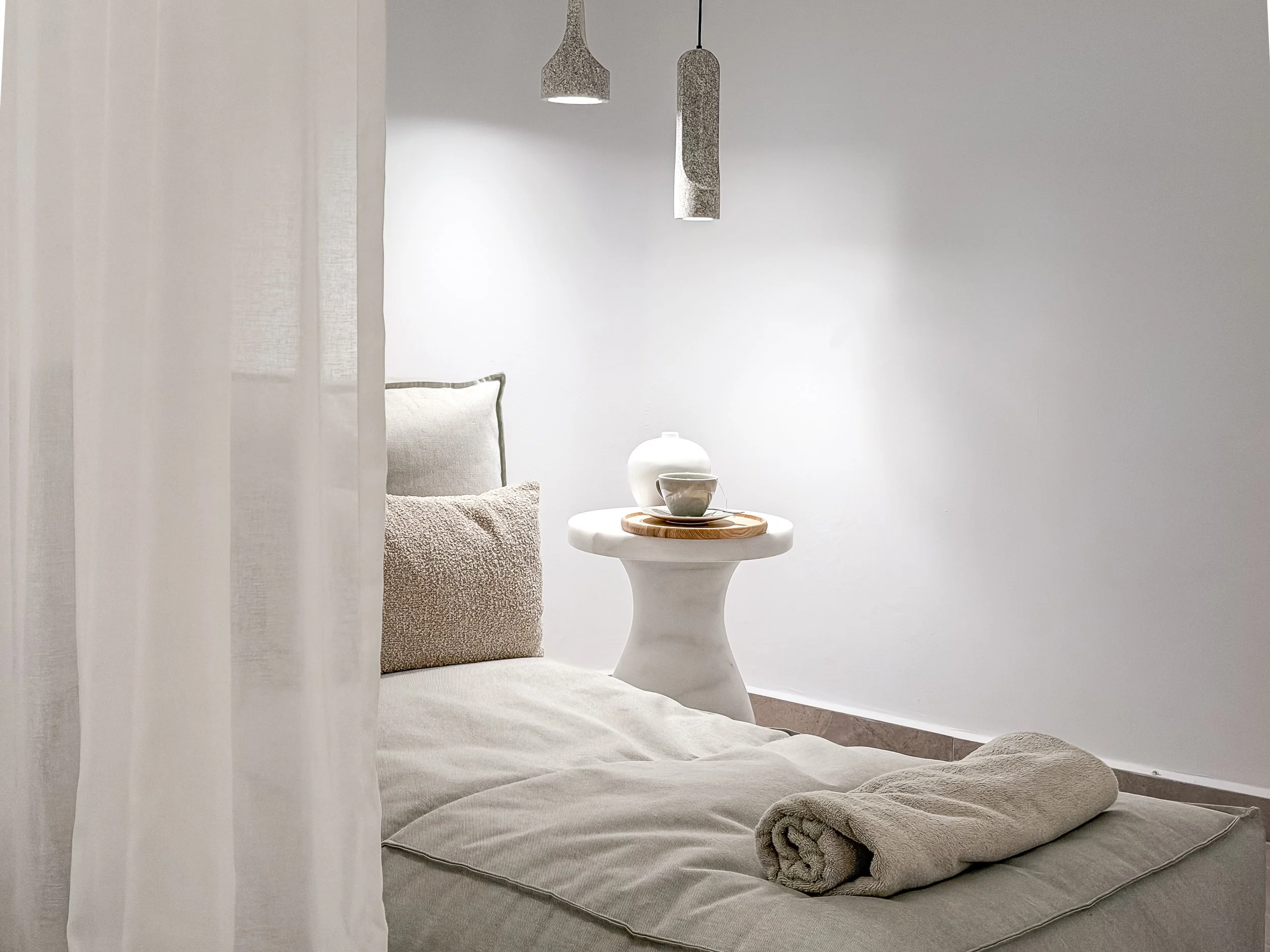
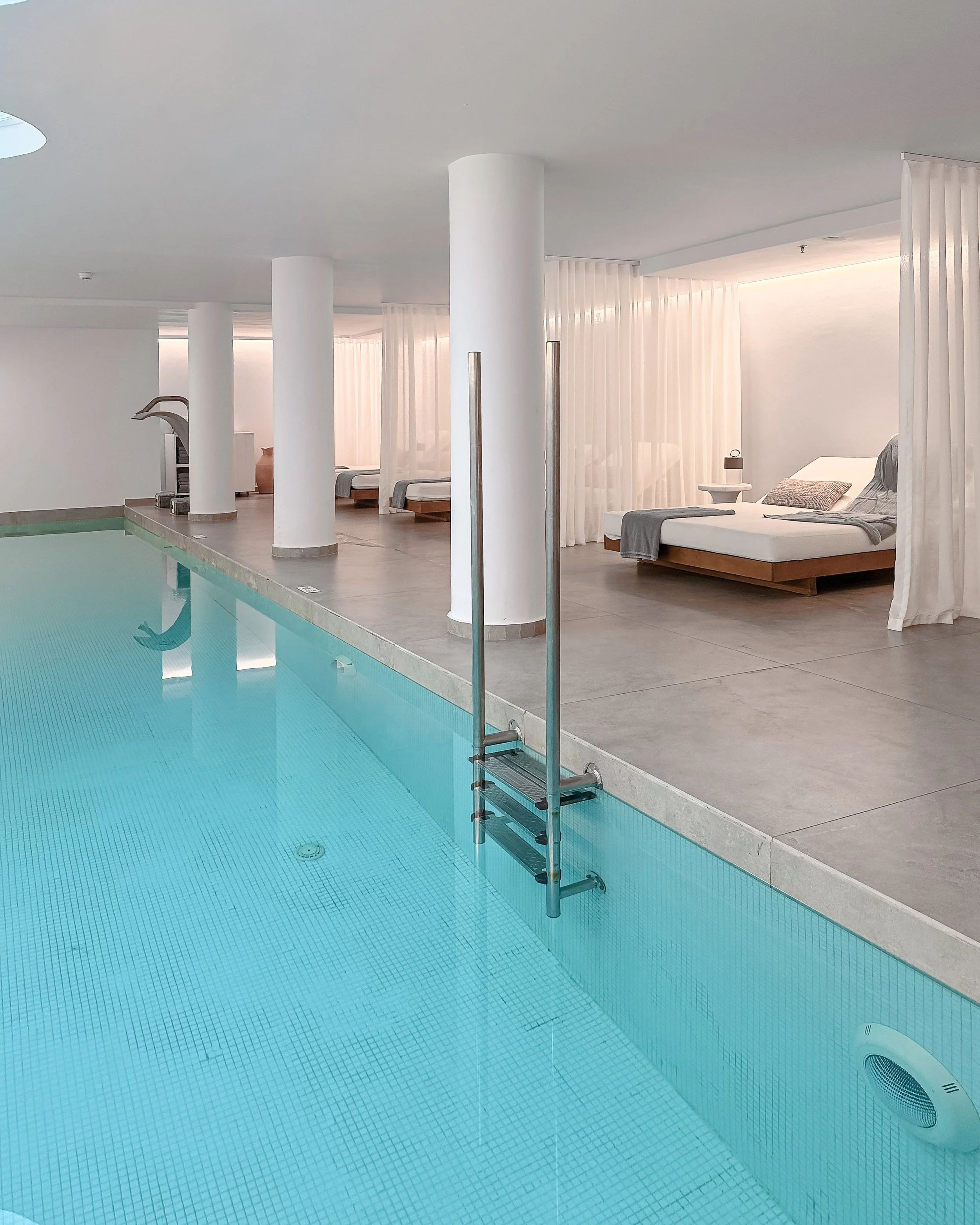
The facilities include three treatment rooms, an indoor pool, sauna, steam room, relaxation areas and a beauty and nail area. A Technogym-equipped fitness and movement space provides a place for guests to maintain their routines, while the spa's treatment menu offers opportunities to focus on relaxation and skin care. Current treatment partners include KOS Paris, QMS Medicosmetics and Seaskin Life. The hotel also highlights tailored wellness experiences designed around individual needs.
I find the concept particularly appropriate for Patmos. The island encourages you to slow down naturally, whether through time spent by the sea, a visit to its spiritual landmarks or simply the absence of pressure to fill every hour. ANASA complements that feeling by giving guests a dedicated space to rest and reset.
The experience need not be complicated. A swim in the indoor pool, time in the sauna, a treatment or a quiet moment in the relaxation area can become a welcome counterpoint to days spent exploring the island.
Discovering Patmos Beyond the Resort
One of the most appealing things about staying at Patmos Aktis is that the hotel provides a comfortable base from which to discover the island, rather than becoming a reason to remain within its grounds. Grikos Bay is beautiful enough to hold your attention for days, but Patmos has plenty to reveal once you begin exploring.
Start with Chora, the island's historic hilltop settlement. Its narrow lanes wind between whitewashed houses, traditional courtyards, small shops and quiet squares. It is best explored without too rigid a plan. Turn down an inviting side street, stop for a coffee or browse a local boutique, and allow yourself to get a little lost.
The Monastery of Saint John is central to the island's identity and deserves time of its own. Its fortified architecture and elevated position make it one of the most striking landmarks in the Dodecanese. The Cave of the Apocalypse offers another perspective on Patmos, connecting visitors with the religious tradition that has shaped the island's reputation for centuries.
The experience is not only for pilgrims. Even for travellers approaching the sites from a historical or cultural perspective, they offer an understanding of why Patmos has retained such a distinctive atmosphere.
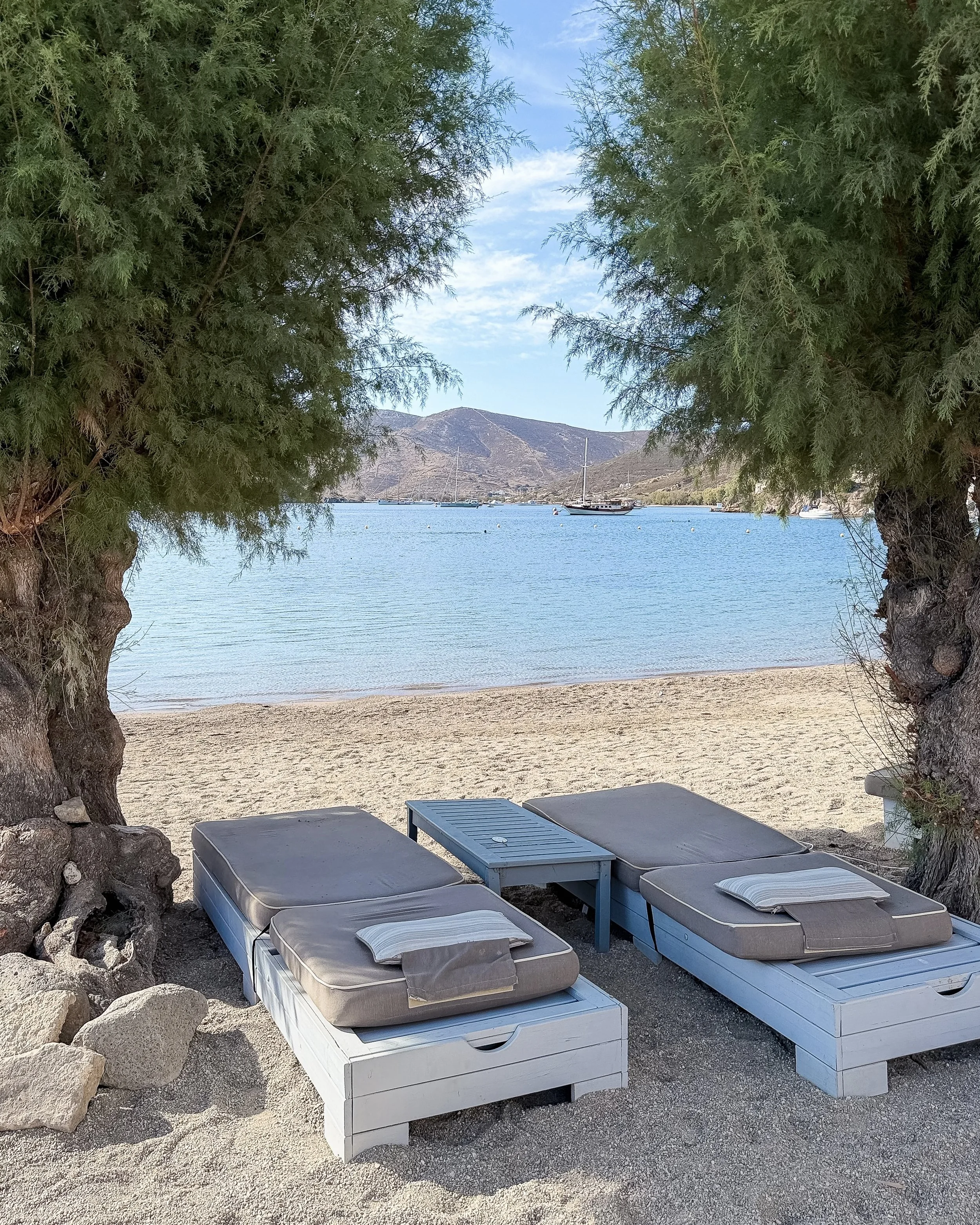
Beyond the main landmarks, the island's coastline rewards exploration. Quiet beaches, rocky coves and clear water create opportunities for swimming and time outdoors, while the landscape's walking routes reveal a different side of Patmos away from the shoreline.
Private Boat Trips to the Neighbouring Islands
To understand the Aegean, it helps to experience it from the water. Patmos Aktis can arrange private boat excursions around Patmos and to nearby islands, including Arki, Marathi and Lipsi. These trips offer the freedom to explore at your own pace, with opportunities to stop for a swim, discover quieter stretches of coast and enjoy the scenery from the deck of a boat.
The nearby islands each have their own character. Arki and Marathi appeal to travellers drawn to smaller, quieter places, while Lipsi offers another island to explore through its beaches, village life and local tavernas. A private excursion makes it possible to shape the day around what interests you, whether that is swimming in secluded coves, a long lunch by the water or simply spending several hours at sea.
There is something particularly special about returning to Patmos by boat. The island's whitewashed buildings and hills emerge from the water, and the journey itself becomes part of the memory rather than just a transfer between destinations.
For guests who want to make the most of the region, the hotel's concierge can help arrange boat experiences and other activities, including guided visits and opportunities to explore the island's marine environment.
The Warmth of Patmos
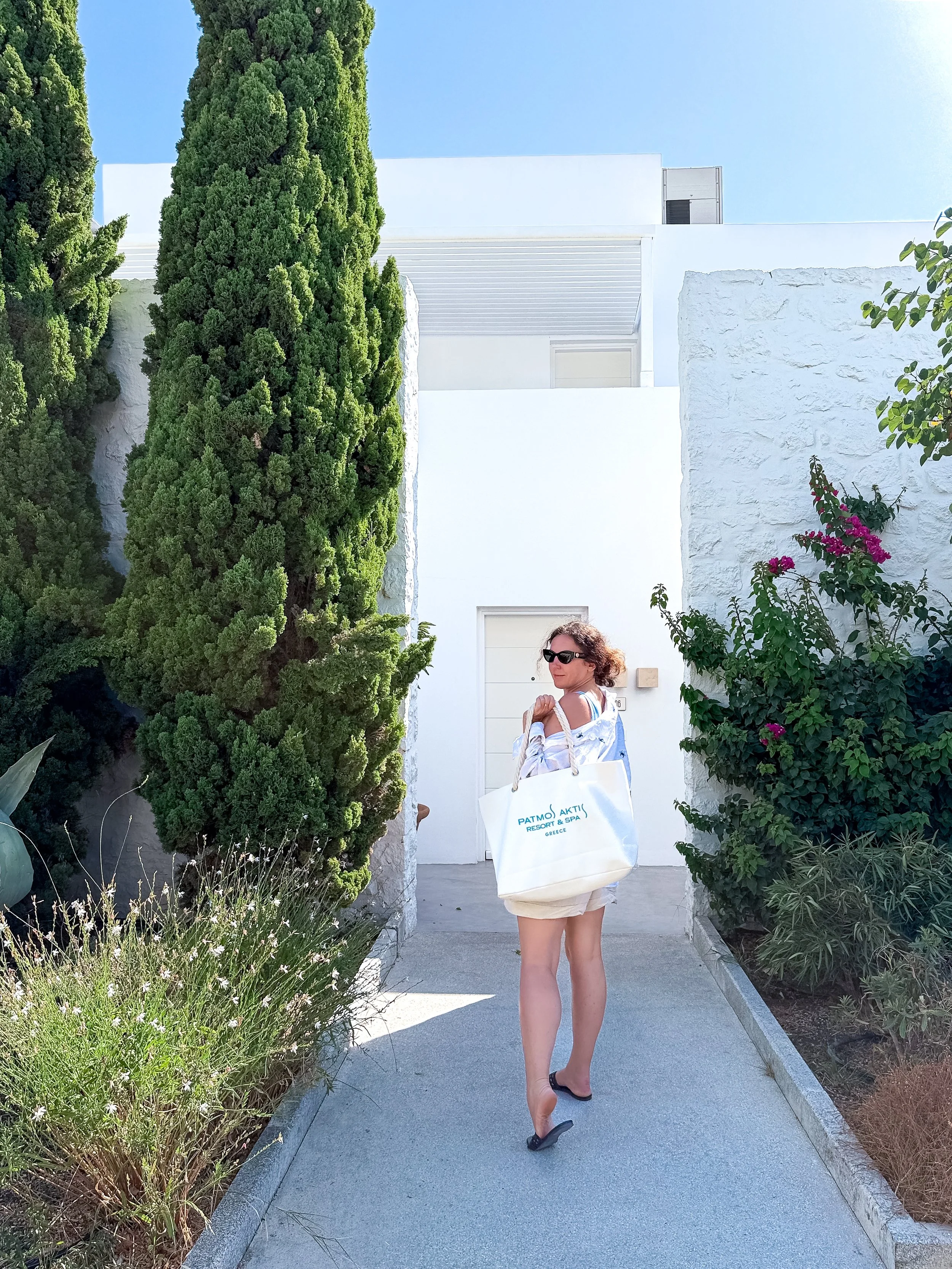
A hotel can offer beautiful rooms, a good restaurant and an exceptional location, yet it is often the people who determine how a stay feels in retrospect. At Patmos Aktis, hospitality was one of the things that stayed with me most.
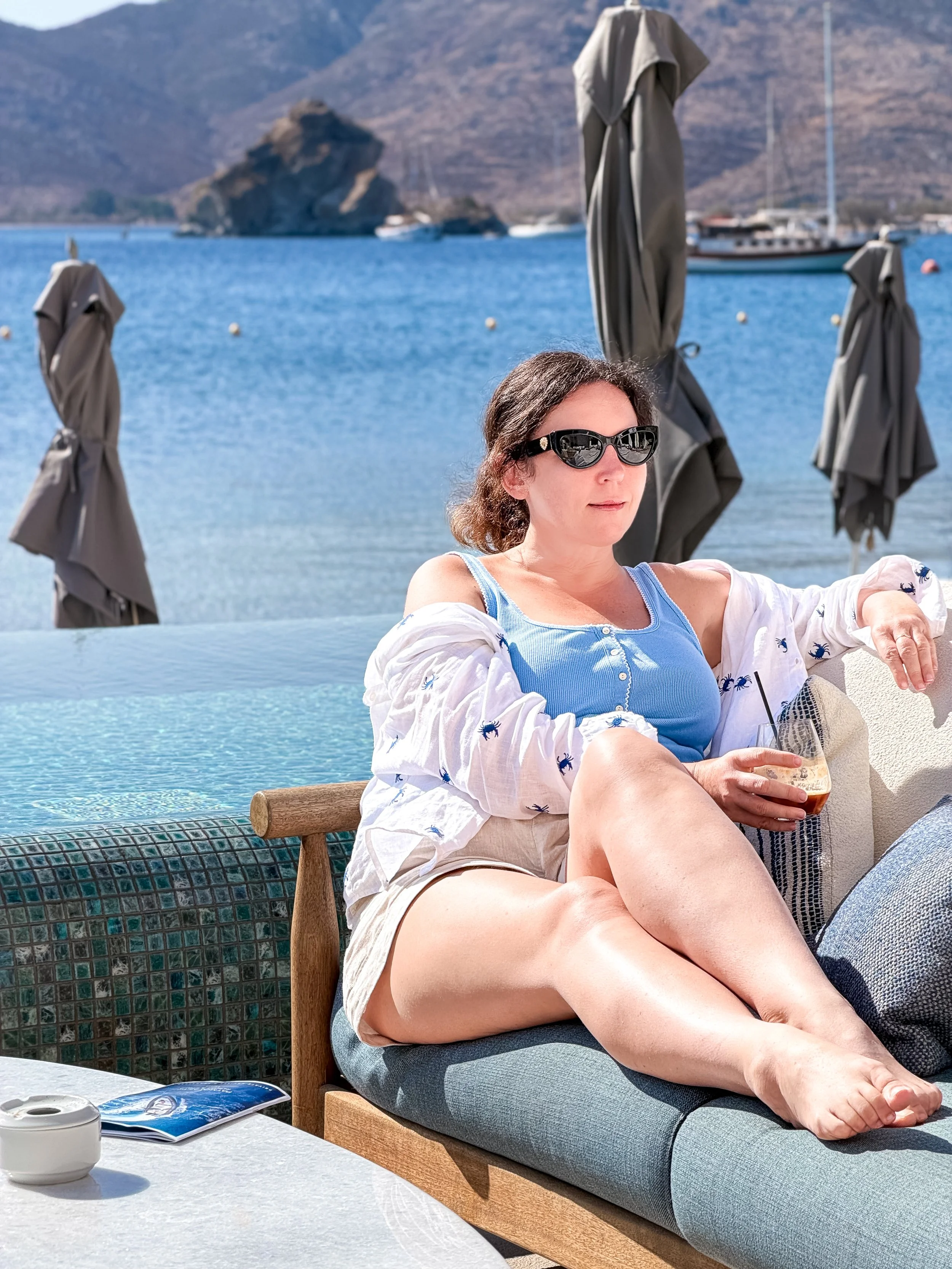
I felt genuinely welcomed and cared for, not simply looked after as a guest. There was a warmth in the interactions that made the experience feel personal, and it was not confined to the resort. As I moved around Patmos, I encountered that same kindness in the wider community.
It is difficult to manufacture this kind of atmosphere, and perhaps that is why it feels so meaningful when you find it. It changes the way you experience a destination. You feel more comfortable exploring, more inclined to linger, and more connected to the place than you might after a stay built entirely around facilities.
For me, the hospitality became part of the island's identity. Patmos felt calm without being sleepy, welcoming without being intrusive, and sophisticated without losing its generosity of spirit. The hotel reflected those qualities rather than competing with them.
That is also why I would not describe Patmos Aktis simply as an escape from everyday life. It is a way of entering the island's rhythm, with a comfortable place to return to at the end of the day.
Getting to Patmos: A Journey by Sea
Part of Patmos's appeal is that it remains an island reached by sea. There is no commercial airport on Patmos, so the journey is an important part of planning a visit. Ferries connect the island with Piraeus, the port of Athens, as well as nearby islands including Kos, Rhodes, Samos and Leros. Routes and schedules vary by season, so it is worth checking connections carefully before travelling.
For guests arriving internationally, flying to Kos or Rhodes and continuing by ferry is often a practical option. Depending on the route and season, other nearby islands may also work. Patmos Aktis can assist with planning the onward journey and coordinating private transfers.
For a more direct and personalised arrival, private helicopter arrangements are also possible through specialist aviation partners. The hotel additionally offers assistance with private boat connections, including speedboat transfers from Kos. The sea crossing can take approximately two hours, depending on the vessel, route, weather and sea conditions, so timing should always be confirmed when arranging the trip. Airport transfers to the departure point can also be coordinated as part of the overall journey.
Although getting to Patmos requires more planning than flying directly into a major resort destination, that extra step contributes to the feeling of arriving somewhere a little apart from the ordinary. The important thing is to organise the connection in advance, especially during busy travel periods, and allow some flexibility around the sea conditions.
A Hotel That Lets Patmos Be Patmos
What makes Patmos Aktis distinctive is the way it brings together experiences that might otherwise feel separate. There is the spirituality of the island, the understated sophistication of the design, the simple pleasure of a swim in the Aegean and the more considered experience of dinner by the water. There are ancient pilgrimage sites to explore, small neighbouring islands to discover and quiet hours when doing nothing feels like exactly the right plan.
The resort offers contemporary comfort without asking Patmos to become something it is not. Its beachfront accommodation, thoughtfully designed interiors, varied dining and ANASA wellness facilities make it an appealing destination in its own right. But its real strength is how naturally it connects guests with the island beyond the property.
I left with a strong impression of the warmth I had encountered, both at the hotel and throughout Patmos. The kindness of the people, the calm of the landscape and the island's particular sense of spirituality all felt connected. They were not separate attractions to tick off, but parts of the same experience.
For couples seeking a romantic escape, travellers drawn to culture and history, or anyone who wants to explore the Dodecanese at a gentler pace, Patmos Aktis makes an excellent base. You can spend the day among monasteries and whitewashed lanes, sail to a neighbouring island, return for a treatment or dinner beside the sea, and still feel that you have experienced something of Patmos itself.
That is the quality I value most about this hotel. Patmos Aktis does not take you away from Patmos; it allows you to experience the island at its best.
Official website: https://www.patmosaktis.gr/